

Ukraine and Russia are often called the breadbasket of the world because of their fertile soil and their key role in the global food supply chain. When the war in Ukraine broke out worries about Black Sea grain supply followed, yet grain exports from the region have remained largely intact. Recently, however, attacks on merchant vessels and port infrastructure in the Black Sea have escalated sharply. This has led to damaged infrastructure and pushed shipowners to avoid the area, which has significantly reduced Black Sea grain trade.
According to Shipfix data, grain cargoes circulated for loading in the Black Sea from August to October totaled 61.4 million tonnes, down 43% from the same period last year. This is a detrimental drop, considering October normally falls within the peak grain export season, driven by the northern hemisphere harvest. A decline of this size typically dulls shipping demand and does not bode well for dry bulk freight rates.
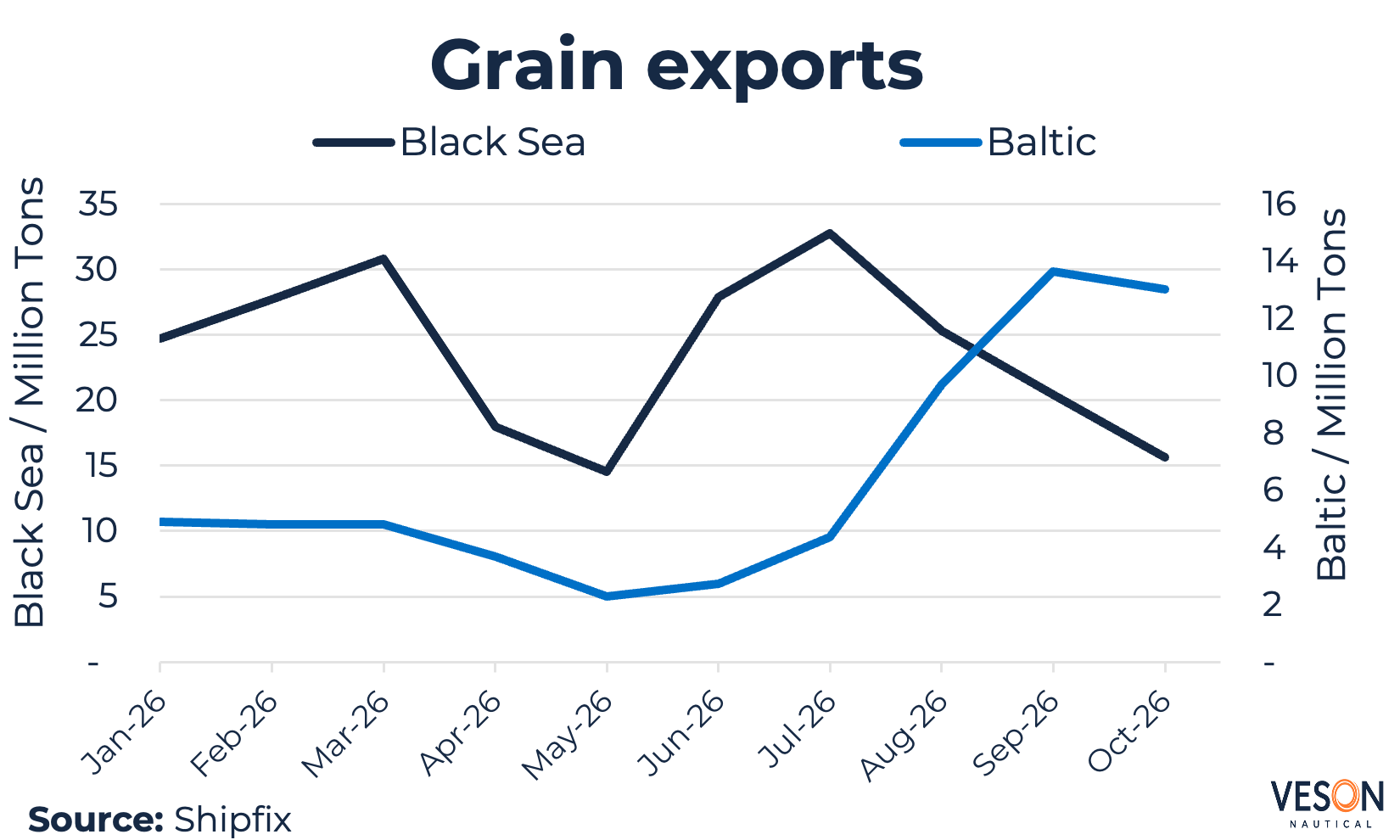
However, this has not entirely been the case in this region, with some of these volumes redirected overland to be exported out of the Baltic Sea from July to October 2026. This has been particularly evident for Russia, which has ports in both the Black Sea and the Baltic Sea. As a result, grain cargoes circulated for loading in the Baltic from August to October 2026 reached 36.3 million tonnes, up 43% from last year.
How will this shift impact dry bulk freight rates?
This shift in the grain trade offers a silver lining for dry bulk freight markets. Most Black Sea grain is destined for the Mediterranean and the Red Sea, a sailing distance of around 1,000 to 2,000 nautical miles. From the Baltic, the average distance to the same area is around 4,000 nautical miles. The longer voyages increase ton-miles, which supports freight rates.
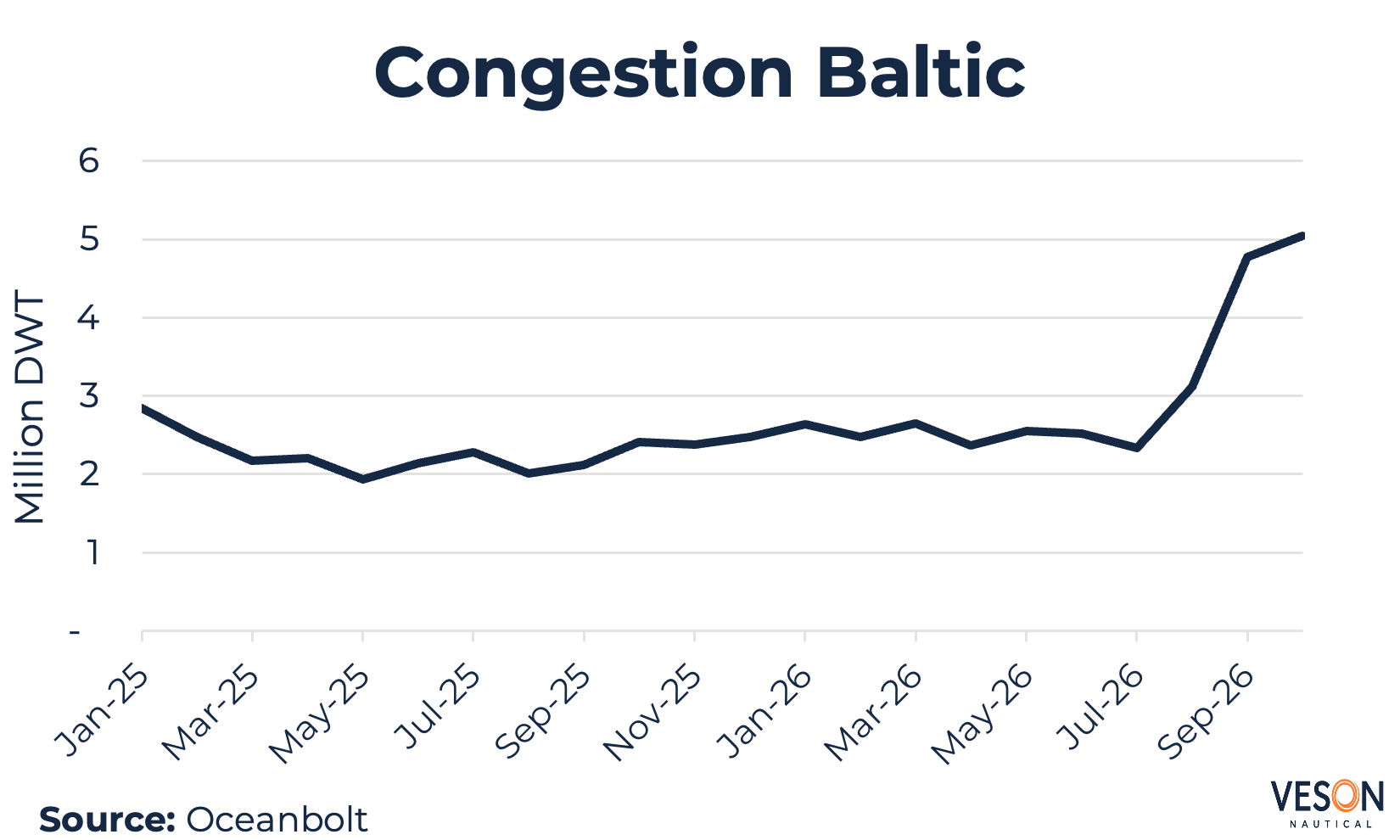
The surge in Baltic grain shipments has also strained port capacity and caused congestion in the area. According to Oceanbolt data, the tonnage waiting to load in the Baltic more than doubled between July and October. This is an unusual development, adding further inefficiency to the market and providing additional support for freight rates.
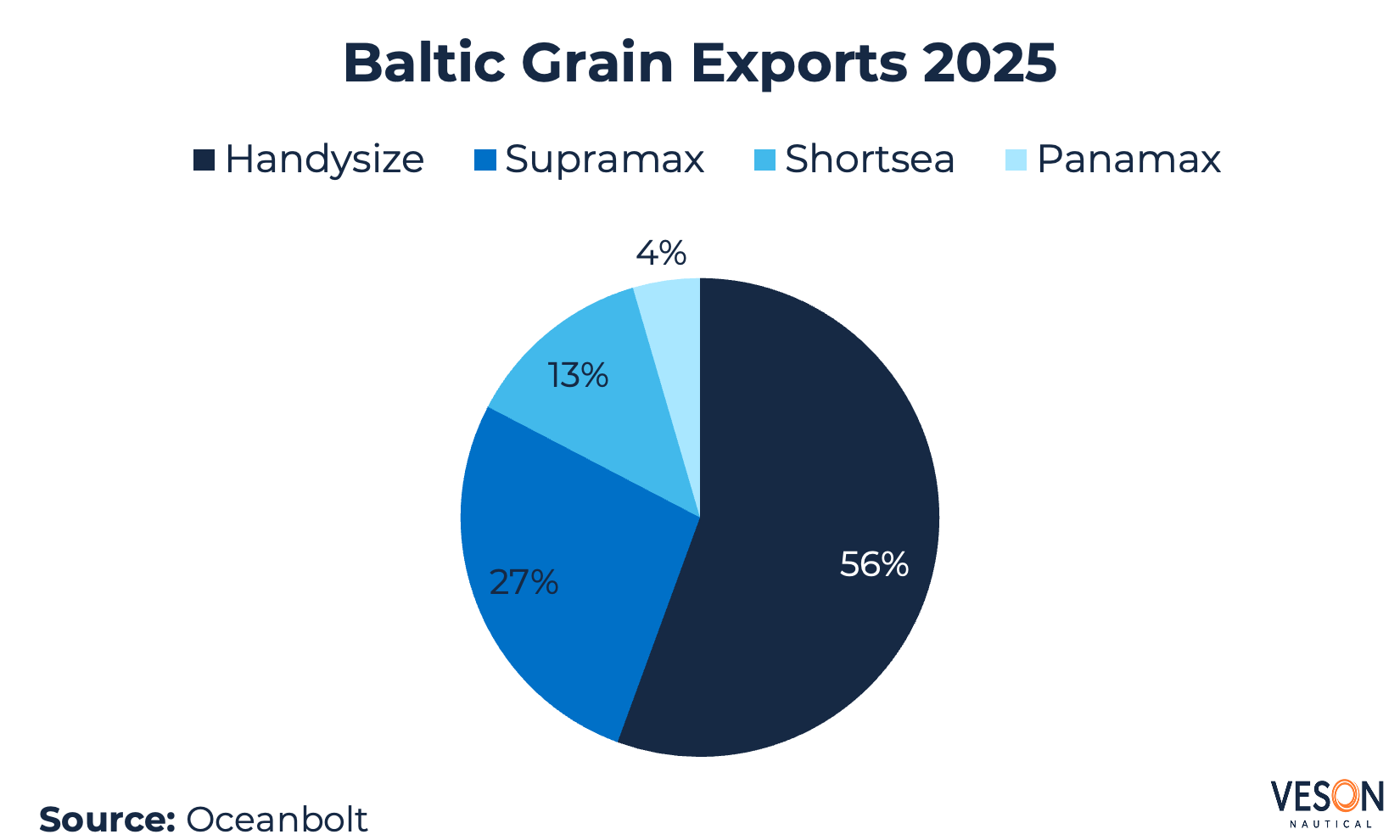
The shift in Russian grain exports is likely benefiting smaller vessels, while larger ones are left out in the cold. Handysizes carry about 56% of Baltic grain and Supramaxes 27%, but the Panamaxes only carry 4%. Panamaxes typically carry around 22% of Black Sea grain volumes, so they suffer from the drop in that trade. Yet they gain far less than Handysizes and Supramaxes from the diversion to the Baltic. This may partly explain the recent disparity in freight rates, with Panamax rates falling below both Supramax and Handysize.
If this trading pattern continues, we may see this disparity persist in the near term with Supramaxes and Handysizes earning more than the Panamaxes.
Download the Shipping Market Outlook: Q4 2026 Executive Summary to get the full dry bulk forecast, or visit the Market Data & Analysis page to learn more about Veson’s analysts and the latest market updates.