
A changing fuel landscape
The fuels powering vessels have shifted sharply in recent years, and the first shift was regulatory. Heavy fuel oil made up about 79% of international shipping fuel consumption in 20181 until the International Maritime Organization (IMO) cut the sulfur limit from 3.50% to 0.50% in 2020.2 Singapore, the world’s largest bunkering port and an indicator of the global market, shows how fast the market moved: low-sulfur fuel oil rose from under 1% of bunker sales in 2018 to 63% in 2020.3
Then the market shifted again. Scrubbers brought high-sulfur fuel back,3 and HSFO reached 29.5% of fuels tested by Veritas Petroleum Services (VPS) in 2023,4 alongside 54.3% VLSFO and 14.2% MGO. Alternatives added another layer. Biofuel blends, LNG, LPG, and methanol add further fuel types, and biofuel volumes tested by VPS rose 50% in 2025, to 1.2 million MT.5
Regulation, which triggered the previous shifts, is now driving the next one. Two carbon schemes changed in 2026. The EU ETS expanded to cover methane and nitrous oxide on January 1, 2026,6 and the UK ETS went live on July 1, 2026, covering domestic maritime emissions.7 The IMO Net-Zero Framework8 remains under negotiation, with a vote expected in December 2026. After repeated shifts, vessels no longer stay on one fuel type. Operators need current and historical bunker data on each vessel record.
Expanded fuel types in IMOS
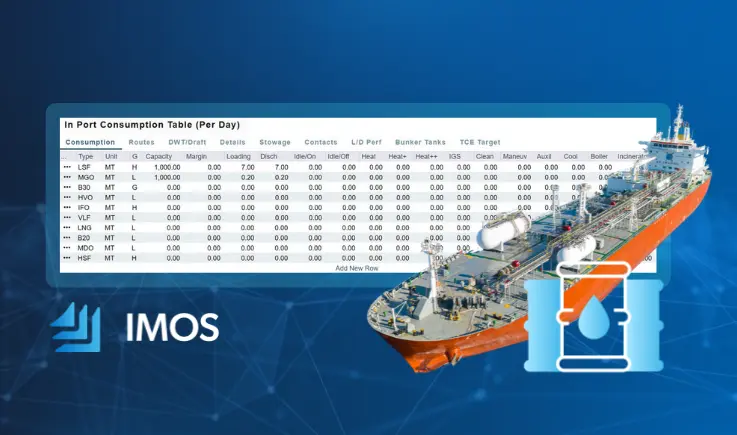
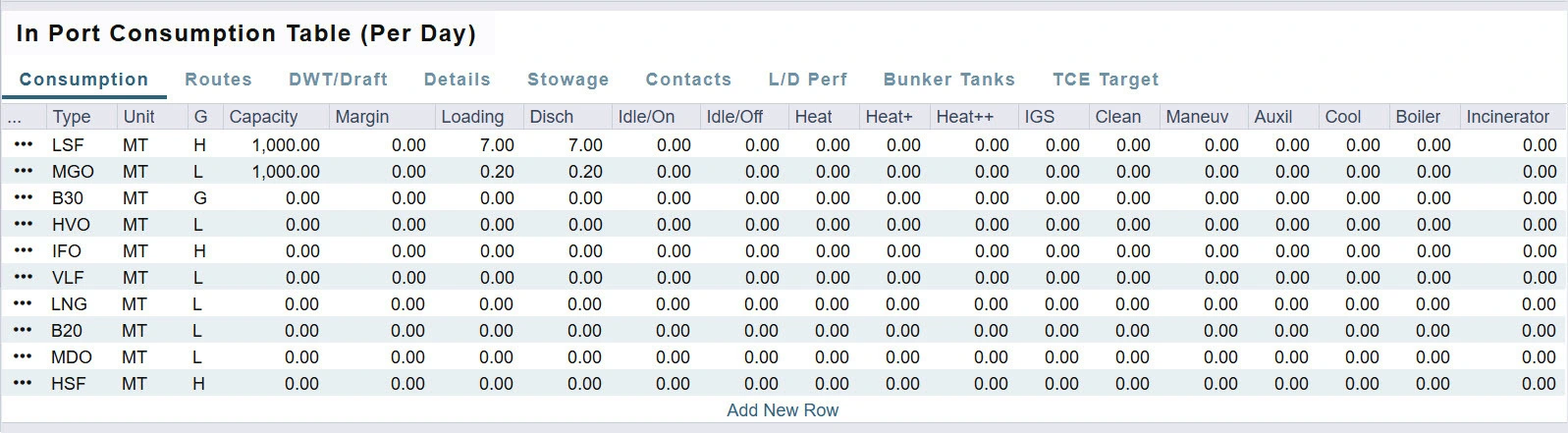
To keep pace with these shifts, IMOS now supports up to ten fuel types per vessel, up from six. The same limit applies to time charter contracts, so a long-term charter can reflect the vessel’s full fuel configuration.
What this means for you
Bunker data touches many areas of IMOS, so extending the limit required significant development work. That complexity stays with us. On your side, here’s what’s changing:
- What you do: Add the new fuel types to IMOS as you normally would, then update your vessels with them.
- What stays the same: Vessel details and long-term time charters can be maintained without major changes.
- What you can stop doing: Building workarounds to fit additional fuels, such as duplicating vessel records or repurposing legacy fuel types.
- What you gain: Estimates and Voyages accurately capture bunker planning, consumption, and cost for multi-fuel vessels configured with up to ten fuel types. Historical records stay on the same vessel.
Please note: This feature is enabled by default and requires schema version 600 or greater. If you prefer to turn it off, set the configuration flag CFGEnableFuelExpansion to N. Contact your Veson representative with any questions.
Continued commitment to supporting regulatory change
Fuel choices will keep changing, and the regulations driving them will keep evolving. Upcoming releases include UK ETS carbon allowance workflows and trades, and we will keep extending support for major maritime regulations and more complex vessel designs that consume a wider range of fuels. If your fleet is expanding its fuel type options, now is the time to bring them into a single, accurate commercial workflow.
Request a demo to get started in IMOS or visit our decarbonization page to learn how to stay compliant with existing regulations.
Sources:
- International Maritime Organization. Fourth IMO Greenhouse Gas Study 2020.
- International Maritime Organization. Sulphur 2020: Cutting Sulphur Oxide Emissions.
- U.S. Energy Information Administration. Today in Energy, article 66544.
- Veritas Petroleum Services. Marine Bunker Fuels Review 2023.
- Veritas Petroleum Services. 2025 Marine Fuel Review.
- European Commission. Reducing Emissions from the Shipping Sector.
- UK Government. Participating in the UK ETS.
- International Maritime Organization. Temporary MEPC 84th Session, Meeting Summary.