
IMOS is used daily by commercial maritime teams to manage freight contracts, voyage operations, financials, and trading exposure. That’s a broad mandate — and it’s one we take seriously through continuous investment in the capabilities that make a real difference to how teams work.
The first half of 2026 brought a meaningful set of enhancements across the board, with key clusters of updates in three areas: decarbonization, LNG operational economics, and a range of general workflow and trading improvements. Taken together, these refinements and new updates reflect our commitment to continuous innovation for your core IMOS workflows – ensuring you keep pace with an ever-changing industry. Here’s a closer look at what’s new and how you can utilize it.
Table of Contents
- Emissions Off-Hire Across EU ETS & FuelEU
- EEX Market Integration for EUAs & FFAs
- DNV Verified EUA Integration
- Agreed Rebill for Emissions Expenses
- FuelEU Pool Journal
- Compliance Breakeven Calculator
- LNG Boil-Off Gas (BOG) Calculation
- LNG CTMS Cargo Values
- Fixed Estimate Locking
- Estimate Snapshot
- Update Estimate Fuel Modes via Webhooks
- Carbon Calculator Comments
- Trading P&L and Exposure Enhancements
Decarbonization
H1 2026 · Compliance built into the commercial workflow
The first half of 2026 brought maritime emissions regulation deeper into IMOS than ever before. From auto-calculated emissions off-hire to verified EUA data, market-connected carbon pricing, and a breakeven view across fuels, these enhancements embed decarbonization directly into the estimate, voyage, and invoice where commercial decisions are made.
Emissions Off-Hire Across EU ETS & FuelEU
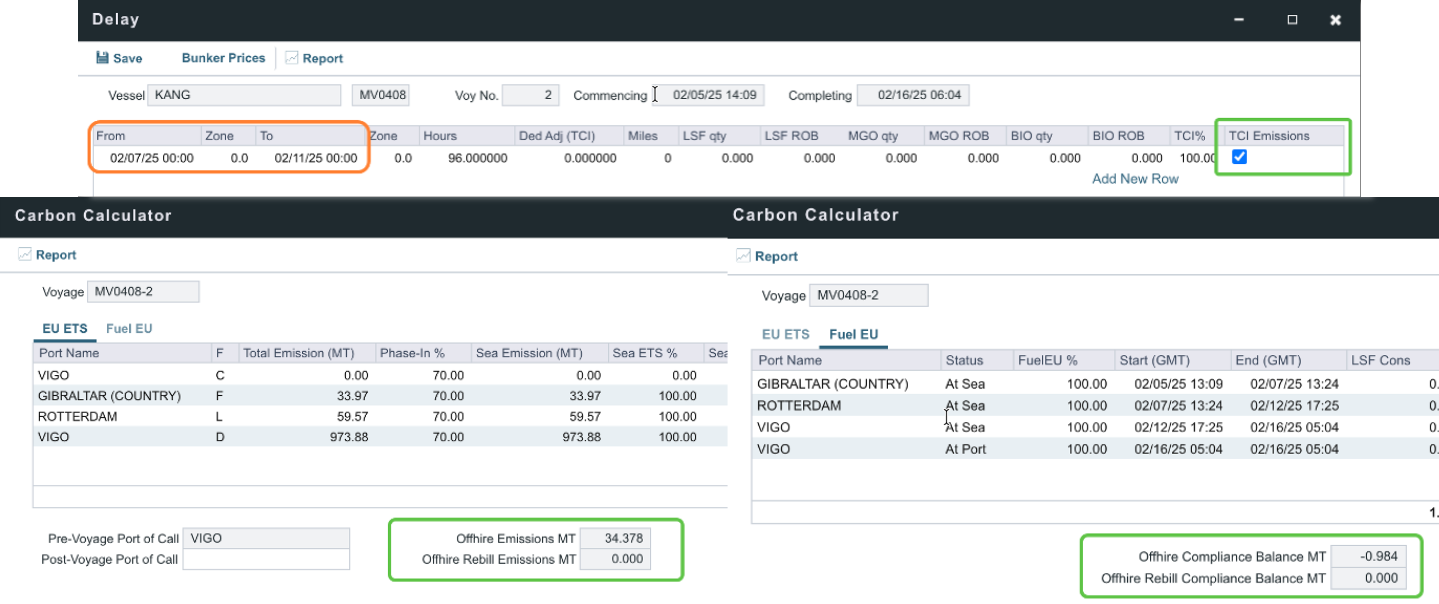
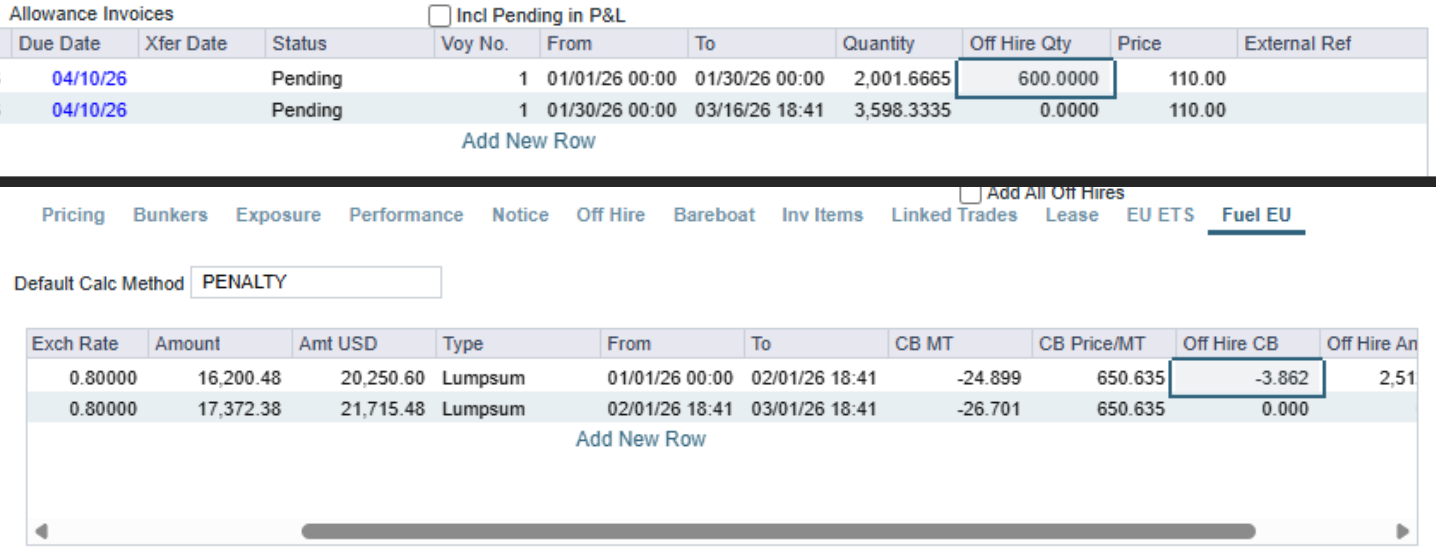
Emissions tied to an off-hire period shouldn’t sit on the wrong party’s compliance exposure. IMOS now auto-calculates emissions off-hire directly from recorded voyage delays. Operators can override bunker quantities on the adjustment so emissions reflect actual consumption rather than system assumptions, and zero-duration off-hire entries are supported for audit purposes without altering the calculation. Critically, a single workflow now applies consistently across both EU ETS and FuelEU Maritime — no separate treatment required.
Modules: IMOS — Operations / Emissions (EU ETS / FuelEU)
EEX Market Integration for FFAs
Announced in Q1, we have a product integration with EEX available, which allows joint clients to access EEX trade data and price information within IMOS. Executed FFAs and EUA Futures flow into your environment automatically, removing manual entry for these high-value instruments and the keying-error risk that comes with it. EEX execution data feeds the platform so teams see a more accurate mark-to-market value of their carbon and freight positions without the manual lift.
Modules: Integration with IMOS — Financials / Trading
DNV Verified EUA Integration
Announced in Q2, we have a product integration with DNV available, enabling voyage operators to receive official DNV-verified EUA data directly into IMOS. This means commercial settlements and counterparty invoicing can be managed against the same verified figures used for regulatory settlement — closing the gap that previously forced teams to reconcile between their compliance system and IMOS.
Modules: IIntegration with MOS — Operations / Emissions (FuelEU)
Agreed Rebill for Emissions Expenses
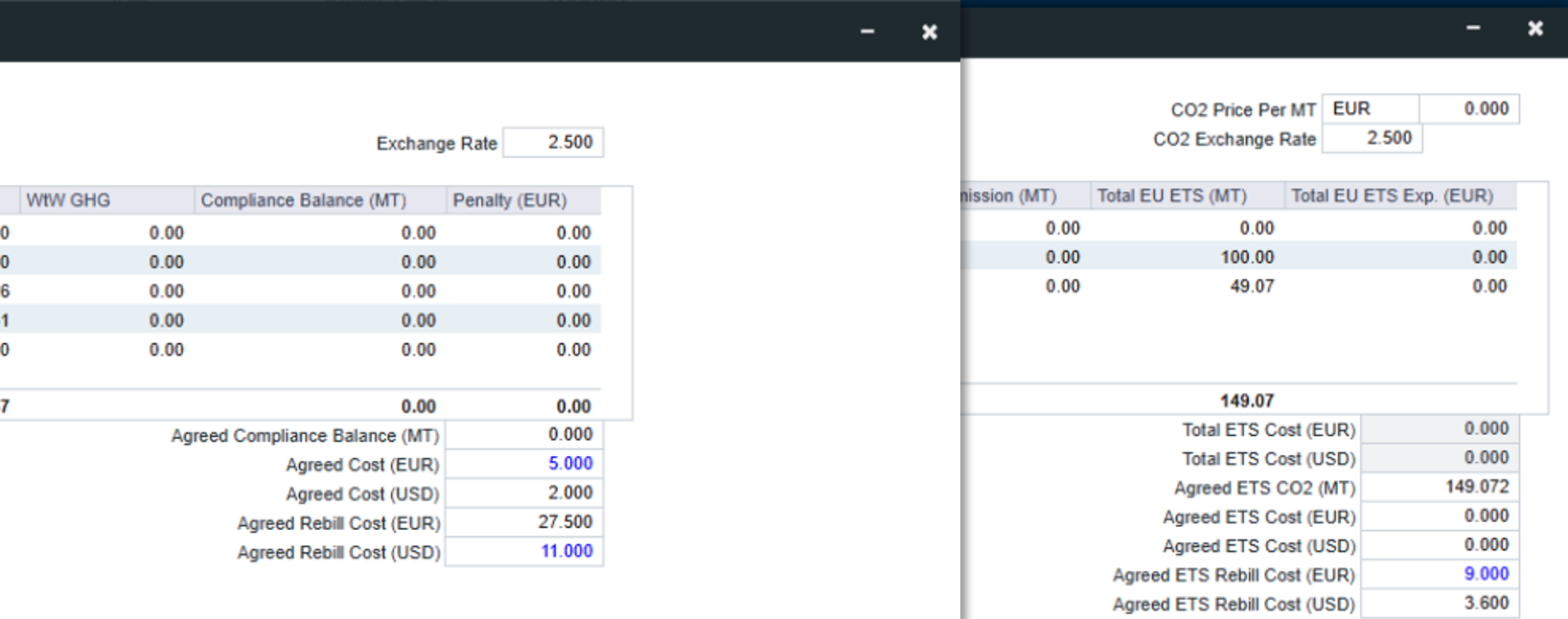
Emissions costs frequently need to be rebilled to a counterparty independently of other voyage expenses. Agreed Rebill introduces dedicated emissions expense handling for counterparty invoicing, letting operators isolate, agree, and rebill emissions-related costs cleanly — separate from freight or hire settlement — with a clear, traceable audit trail.
Modules: IMOS — Financials / Emissions (EU ETS / FuelEU)
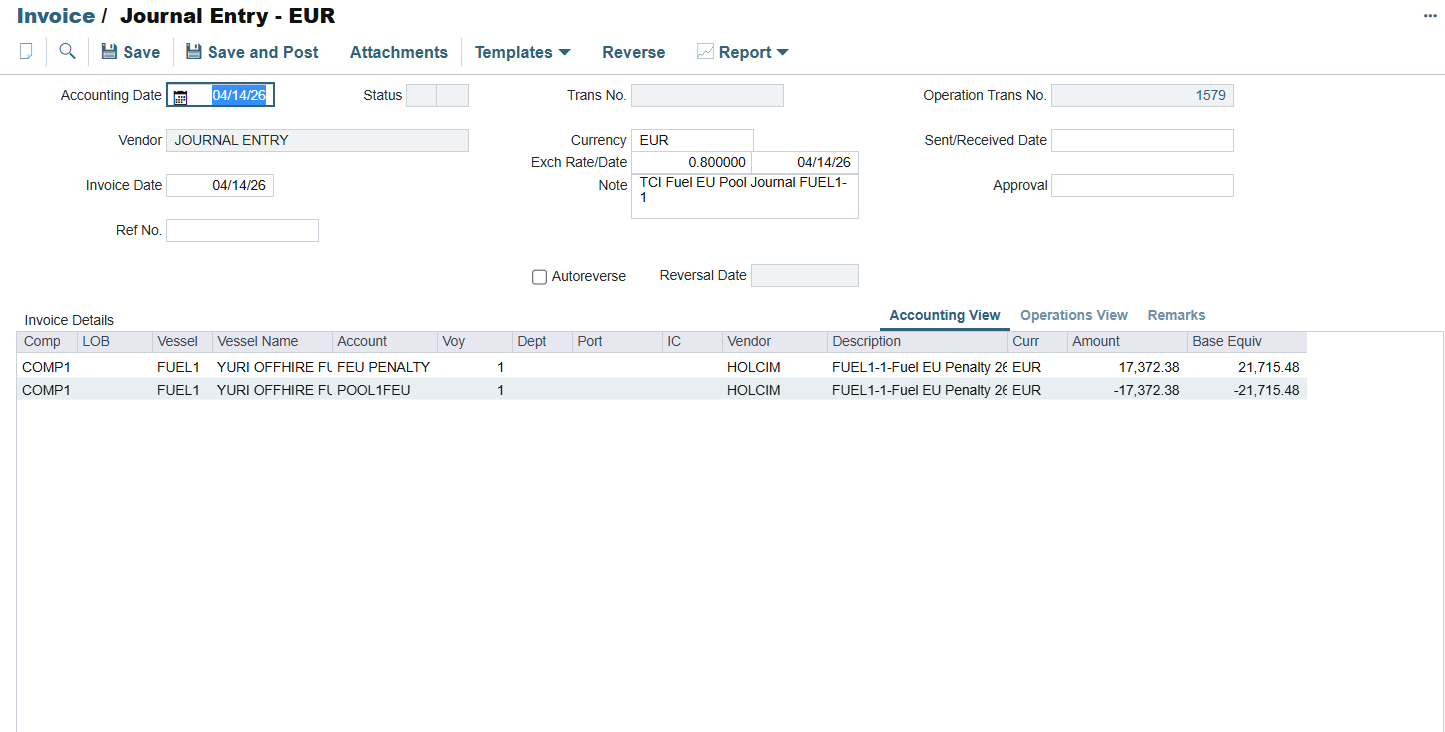
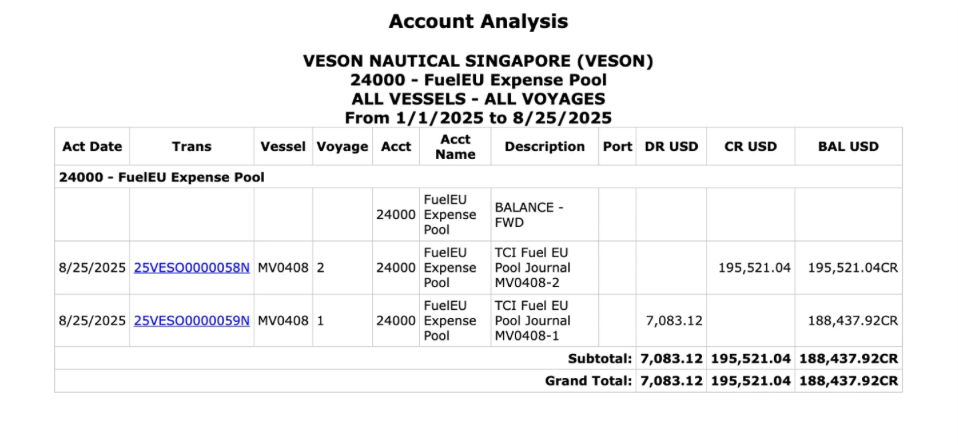
FuelEU Pool Journal
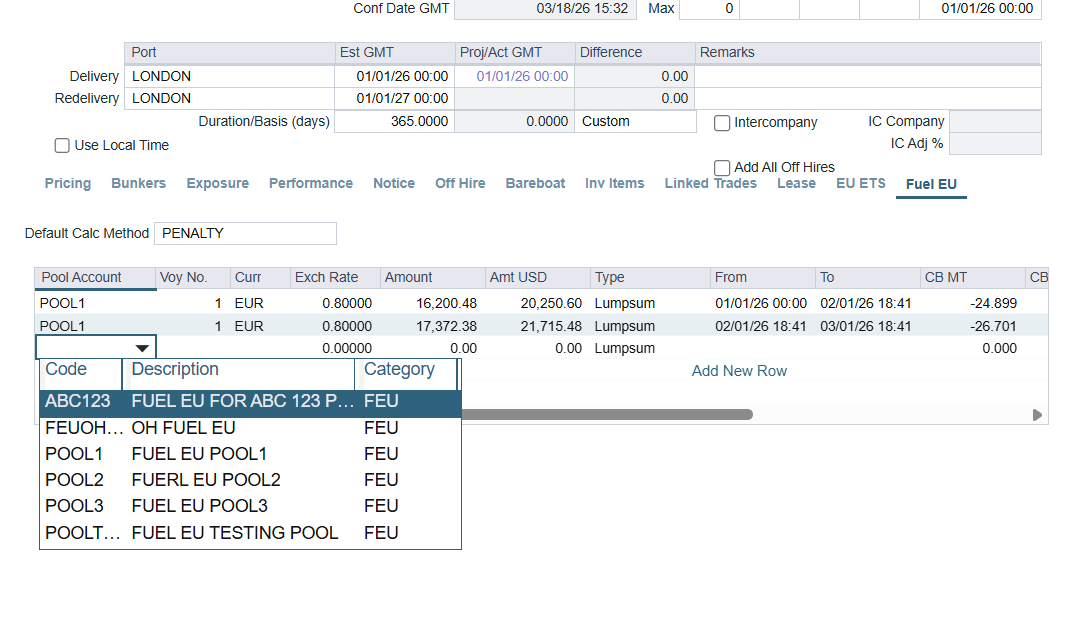
Under FuelEU Maritime, a voyage burning only fossil fuel can incur a steep compliance penalty, while a voyage on sustainable fuel builds a surplus. The new pooling workflow lets you move compliance into a shared pool account and journal it between voyages — so over-compliant vessels can cover under-compliant ones. The result is smoother voyage P&L over time and meaningfully reduced penalty exposure on any single negative-balance voyage compared to paying each penalty outright.
Modules: IMOS — Financials / Operations
Compliance Breakeven Calculator
Choosing a fuel is now a commercial decision as much as an operational one. The Compliance Breakeven Calculator evaluates the cost to reach compliance on an estimate or voyage across a range of sustainable and fossil fuels at different prices per metric ton — surfacing the exact breakeven point where injecting sustainable fuels into a voyage results in a compliance balance of zero. Run multiple scenarios directly inside IMOS without external modeling.

Modules: IMOS — Chartering / Emissions (FuelEU)
LNG
H1 2026 · Modeling the economics that are unique to gas
LNG voyages carry economics no other trade does: boil-off, energy-based settlement, and custody transfer measurement that determines what actually changes hands. IMOS has deepened its LNG operational model so those defining quantities are captured and calculated in-system rather than reconciled after the fact.
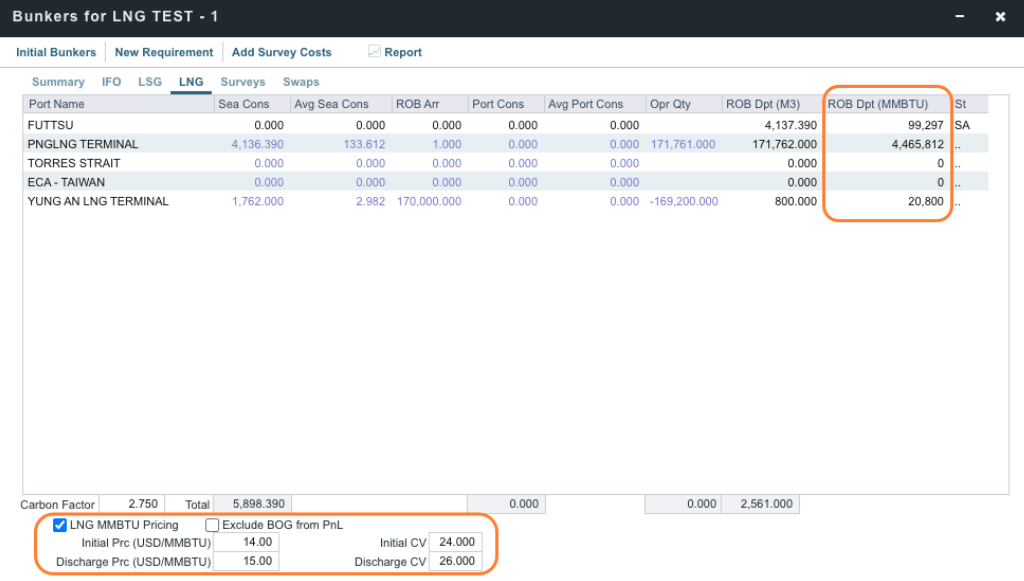
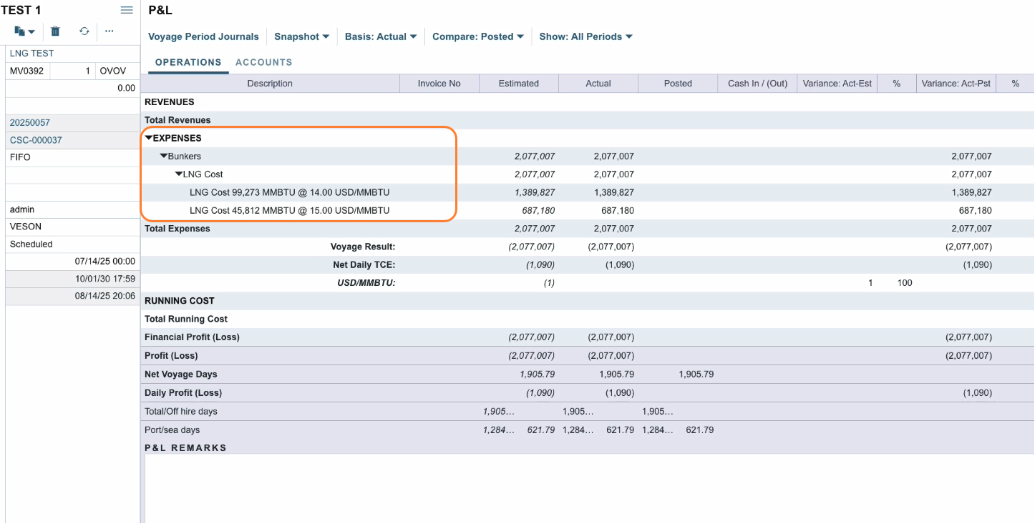
LNG Boil-Off Gas (BOG) Calculation
Boil-off gas is a defining economic of every LNG voyage. IMOS now calculates BOG across the voyage — accounting for the gas that naturally vaporizes from cargo and is consumed or managed in operations — giving operators an accurate view of cargo loss, fuel substitution, and the resulting commercial impact in MMBtu. An accurate BOG calculation feeds directly into cargo reconciliation and voyage P&L, sharpening economics from estimate to settlement.
Modules: IMOS — Operations / LNG
LNG CTMS Cargo Values
The Custody Transfer Measurement System (CTMS) is the authoritative record of LNG quantity and energy transferred at load and discharge. IMOS now captures CTMS values directly, letting operators reconcile loaded and discharged energy, drive MMBtu-based freight and settlement, and align voyage figures with official custody transfer documentation — all within the same system where the voyage is managed.
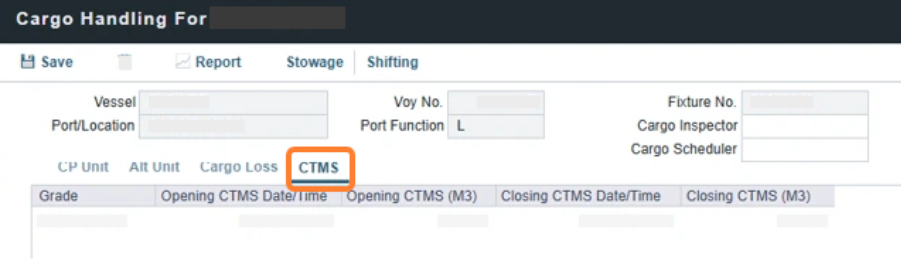
Modules: IMOS — Operations / LNG / Financials
General Updates
H1 2026 · Sharper estimates, cleaner workflows, more precise P&L
Alongside the regulatory and commodity-specific work, H1 2026 delivered a set of enhancements that improve day-to-day commercial and operations workflows. These are the quality-of-life improvements your teams will feel in their estimates, integrations, and trading P&L.
Fixed Estimate Locking
Estimates evolve as environmental data is updated, but the numbers behind a fixed deal sometimes need to be held. Fixed Estimate Locking lets users lock an estimate so the agreed economics are preserved against subsequent data center changes that would otherwise silently alter the calculation. A locked estimate also provides a stable, auditable reference point for the agreed fixed position.
Modules: IMOS — Chartering
Estimate Snapshot
Decisions are made at a point in time — and it helps to keep that picture. Estimate Snapshot captures the state of an estimate at a given moment, so users can preserve and revisit how an estimate looked when a decision was made. This is useful for comparison, commercial review, and audit, and all P&L line items are available on the Voyage Estimate table in Report Designer for deeper reporting.
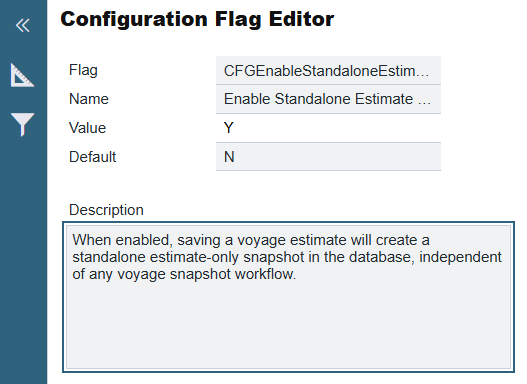
Modules: IMOS — Chartering
Update Estimate Fuel Modes via Webhooks
Fuel mode assumptions drive bunker costs on every estimate. IMOS now supports updating estimate fuel modes through webhooks, letting external systems and data feeds programmatically set or refresh fuel modes on an estimate. This keeps assumptions current and consistent across the book without manual re-entry — and is particularly useful for teams building integrations that push fuel mode changes into IMOS from external sources.
Modules: IMOS — Chartering
Carbon Calculator Comments
Emissions figures often require documented context — whether it’s a regulatory assumption, a contractual clause, or a reviewer note. The Carbon Calculator now includes a comments section, letting users capture notes directly alongside the calculation so the reasoning behind a figure lives with the commercial record rather than in a separate document or a remarks field somewhere else.
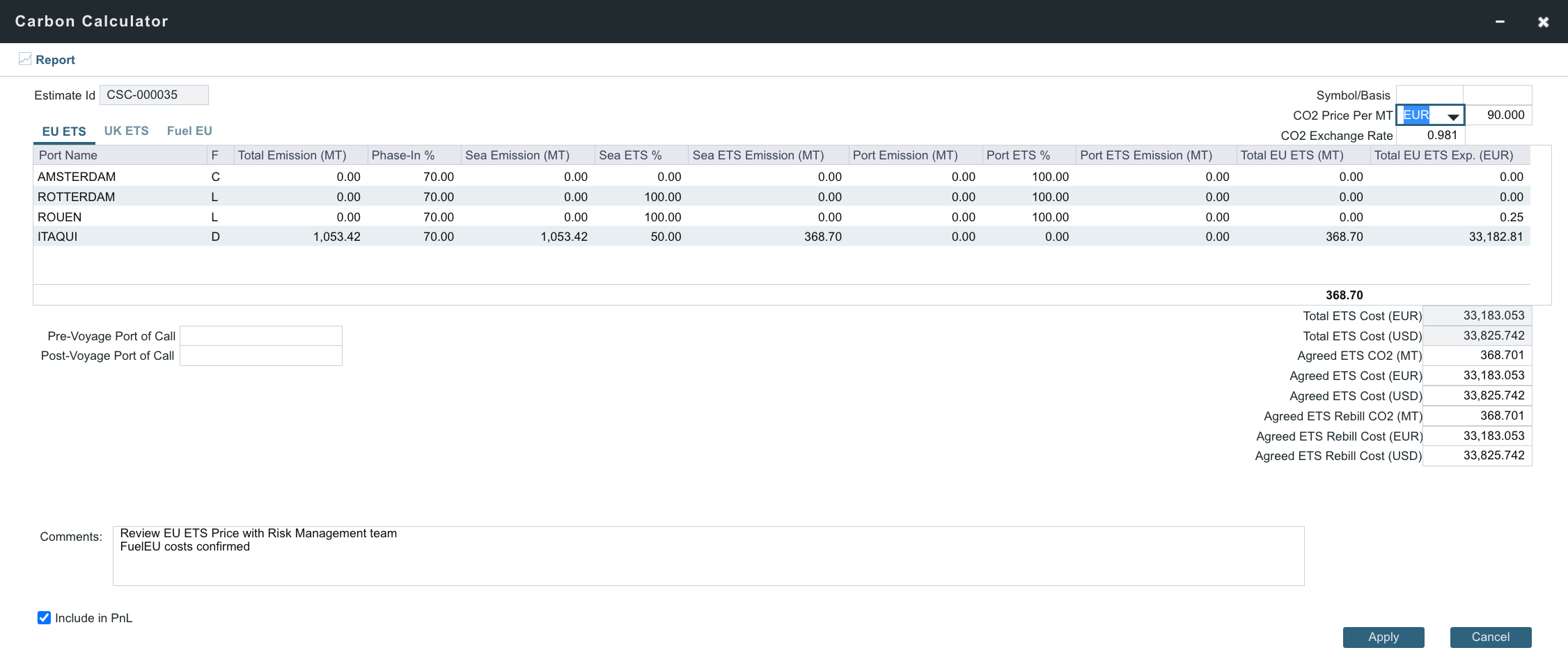
Modules: IMOS — Estimate / Voyage
Trading P&L and Exposure Enhancements
The first half of 2026 included a significant investment in IMOS Trading & Risk exposure accuracy and P&L precision. Here’s what changed:
TC Exposure Calculations. Time Charter exposure now reflects how desks actually mark to market. Users can drive exposure by a chosen curve and curve month over a defined period, convert exposure to a market-standard (Baltic-basis) tonnage that matches FFA hedges, and view implied exposure on index-linked contracts so only genuinely unpriced days count against the market. Specifying days in a month now automatically shuffles days from adjacent months, conserving the contract’s true total exposure days.

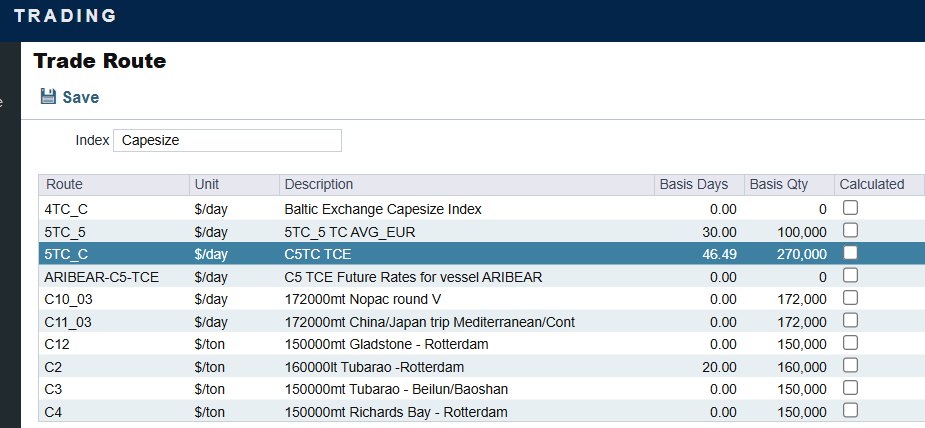
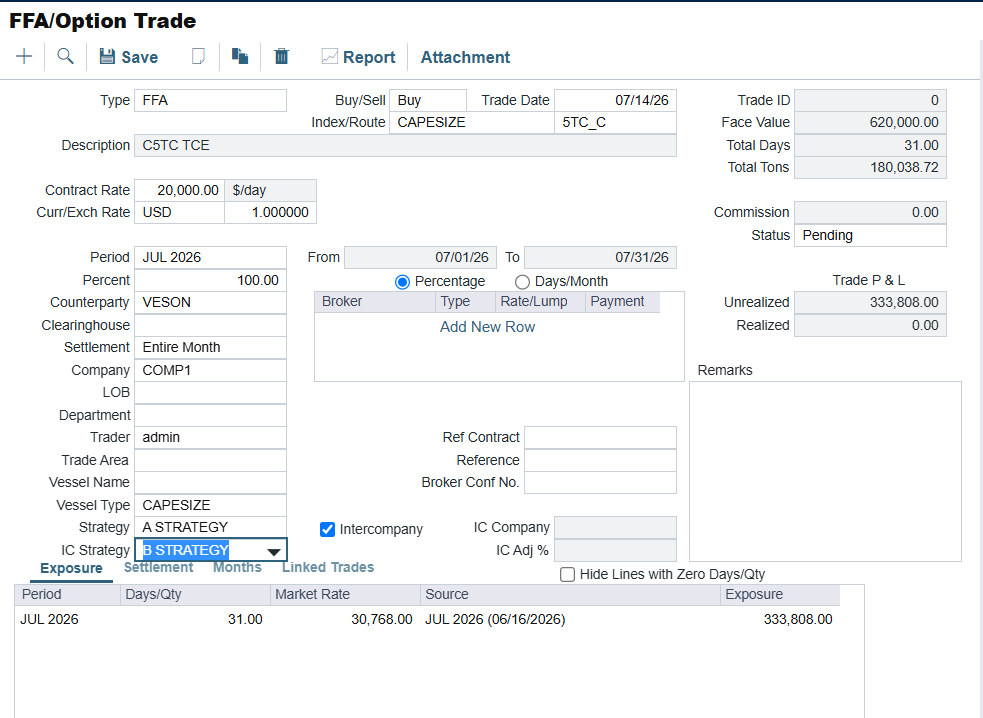
Intercompany Trade Strategy. Mirrored intercompany trades can now carry their own independent strategy for risk reporting on the counter-side. Set an IC Strategy on the counter-side at creation and the mirrored trade keeps that strategy while still mirroring later buy/sell changes — for both front-end and imported trades.
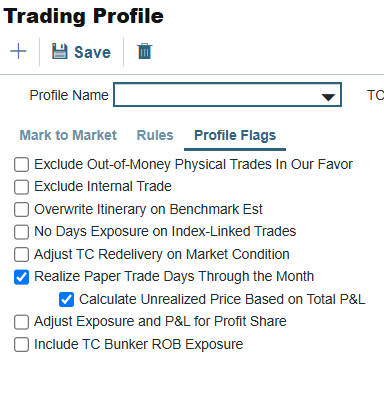
P&L Precision and Exposure Filtering. When realizing paper trades through the month, an optional sub-flag backs the unrealized price out of total versus realized P&L so the unrealized portion is accurate before settlement without affecting overall P&L. Cargo and VC In exposure now filters correctly across month boundaries, so contracts with exposure in the selected period appear consistently in both Trading Summary and Trade Details views.
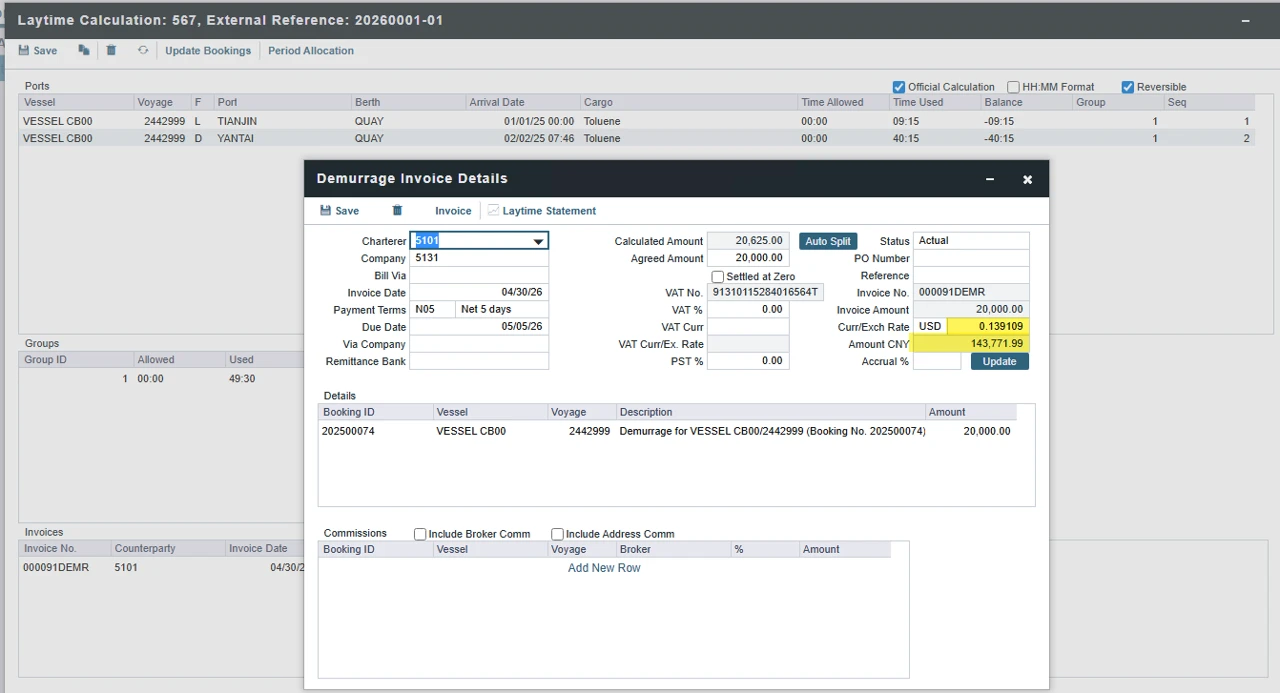
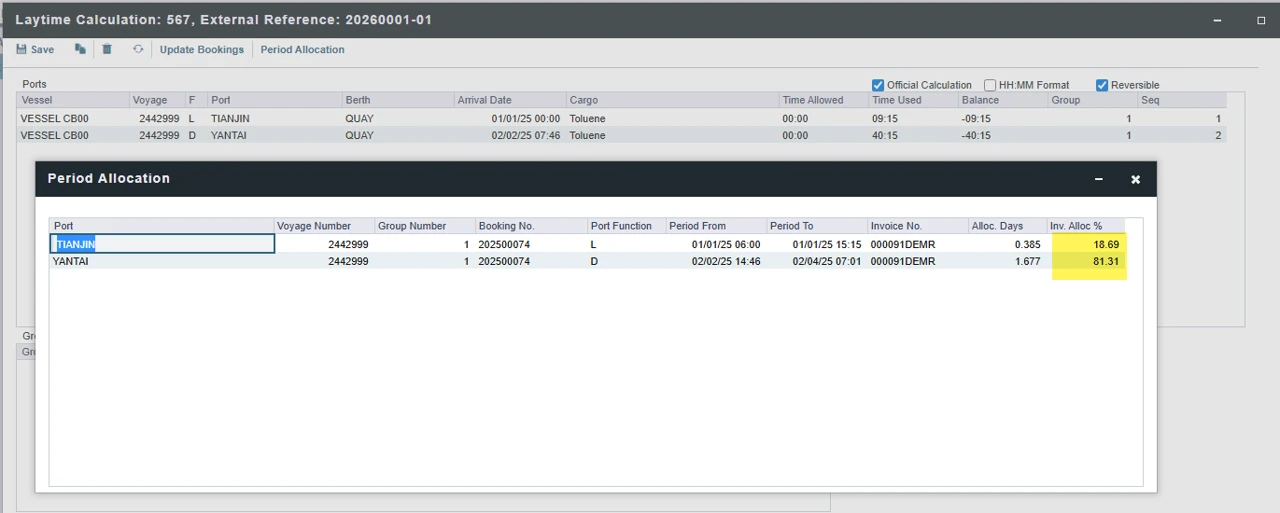
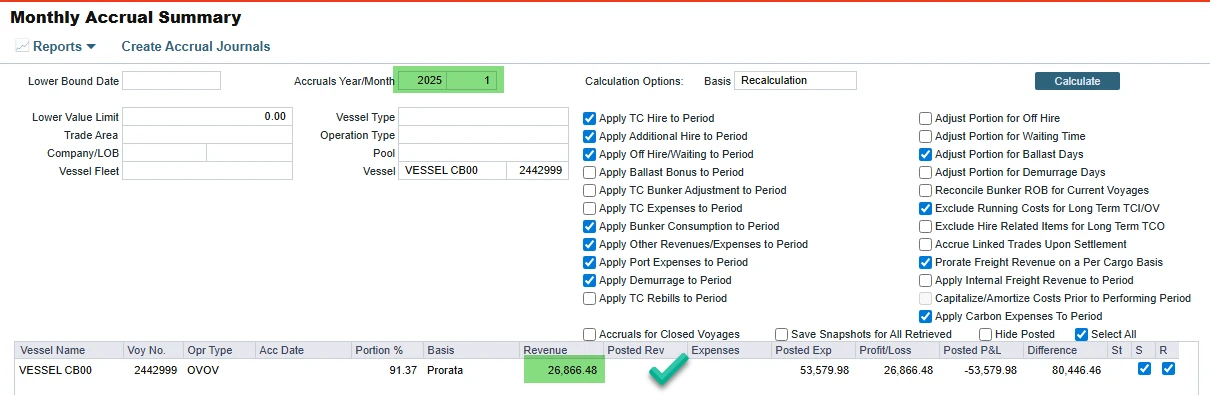
Accrual Accuracy. Period-allocation data from laytime calculations — including BookingID and multi-period allocation amounts — now flows accurately into accrual journals, eliminating the manual checks that were previously required to confirm the numbers reconciled.
Modules: IMOS — Trading & Risk / Financials
The updates above reflect where IMOS is today and the pace at which it continues to evolve. Every one of these enhancements was built in response to the real commercial and operational challenges our clients face.
To learn more about any of these updates or how to configure them, chat with Fin Support Assistant in IMOS or reach out to your Account Manager. And stay tuned — there’s more on the way.