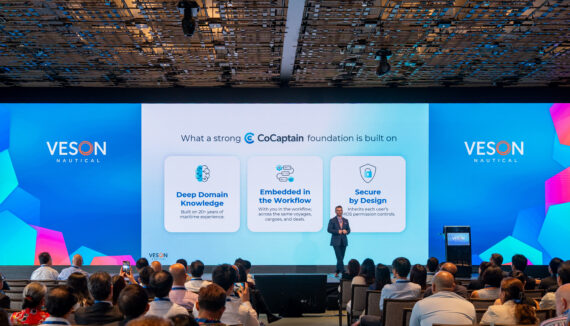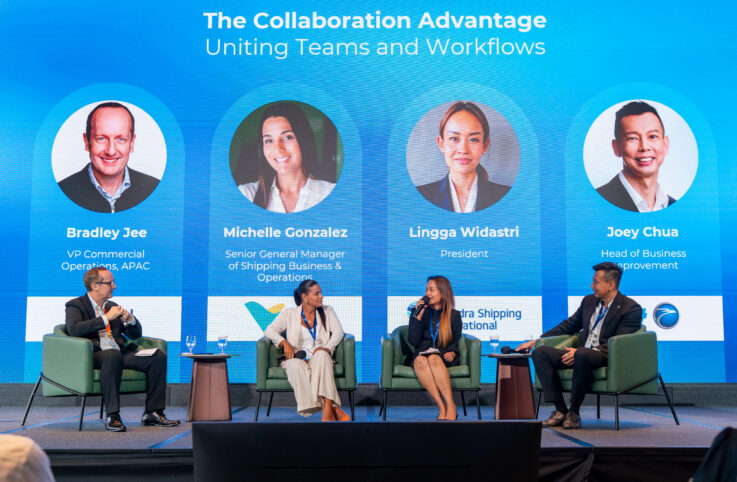

One of my highlights from our recent Singapore Summit was moderating a client panel on how collaboration and connectivity across teams and systems are making a difference in shipping.
On stage with me were three esteemed leaders from different corners of the industry:
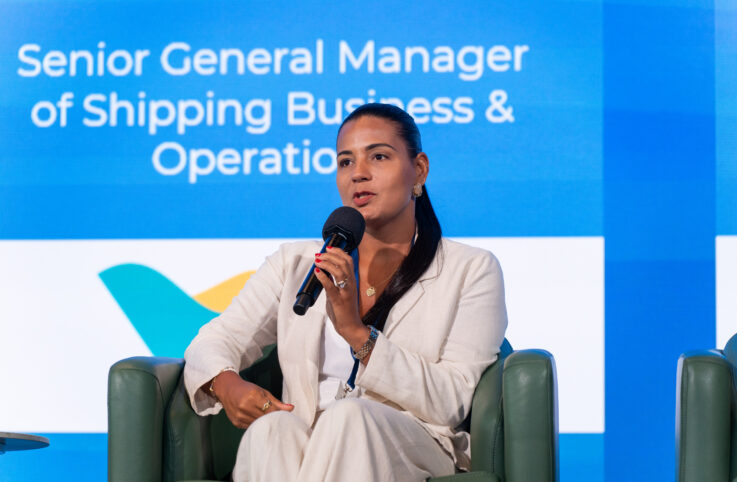
- Michelle Gonzalez, Senior General Manager of Shipping Business and Operations at global mining company Vale
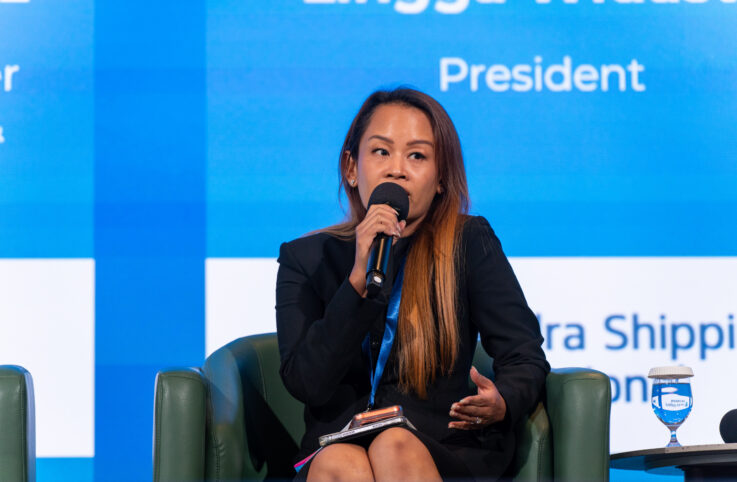
- Lingga Widastri, President Director at PT Chandra Shipping International, the fast-growing petrochemical shipping business within Chandra Asri Group
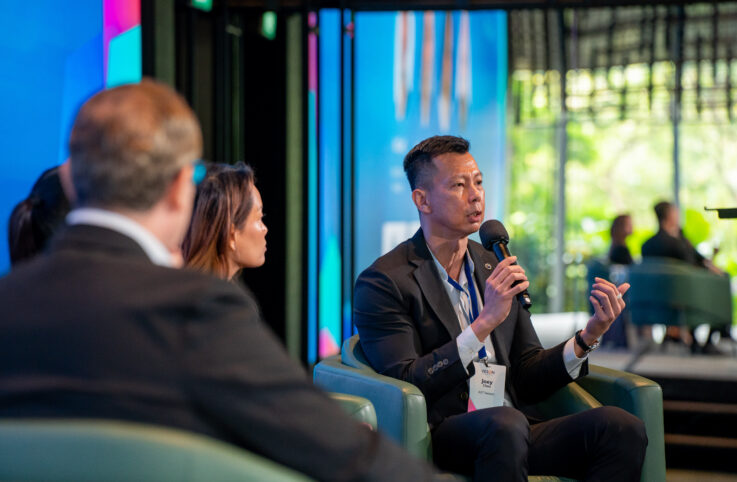
- Joey Chua, Head of Business Improvement at tanker owner-operator AET
Though their businesses may be unique, many of the challenges faced around successful collaboration were shared experiences. In shipping, a decision in chartering, operations, or finance ripples into all the others. Collaboration means everyone sees the same information and works toward the same goal. As Michelle pointed out, what looks efficient to one team can easily create inefficiency for another.
It was also rewarding to hear where the Veson Platform fits in. Michelle shared that connectivity and data sharing were among the biggest reasons Vale moved to Veson around five years ago. Bu Lingga said her team has had a positive experience with the platform as PT ChandraShipping scales quickly. And Joey described recently bringing a challenge to our CEO, John Veson, who started prototyping a solution and shared his vision back with the AET team. That’s the kind of innovative collaboration that AET looks for in a tech partner.
Ready to connect your teams, data, and workflows in one place? Explore the Veson Platform.
Key takeaways from our discussion:
- Unify your data first. One shared view cuts out the back-and-forth.
- Start with small wins. They make the next change easier to adopt.
- External collaboration runs on trust, so choose partners deliberately.
- Connected teams stop hunting for answers and start acting on them.
- The hardest part isn’t the technology. It’s building discipline around change.
Now, let’s get into some of the key insights shared by our panelists.
How can shipping companies break down data silos?
Vale’s value chain runs from mine to rail, rail to port, port to vessel, and vessel to client. Michelle explained that each link has traditionally optimized for its own targets. Years of digitalization also left the business with many systems that didn’t always agree.
Vale’s answer has been to bring that data into one unified view, connecting operations from port to client. The payoff is fewer emails and phone calls, everyone working from the same numbers, and a clearer picture of why costs move the way they do.
PT Chandra Shipping faces a different version of this challenge: it serves Chandra Asri Group’s own supply chain while also growing its third-party business. Bu Lingga’s approach has been to establish one commercial mindset. Every voyage is measured on utilization, cost, and service, whether the cargo is in-house or external. The group’s cargo provides a stable foundation, and competing for outside business keeps the team sharp.
How do you drive technology adoption in maritime teams?
Start small. As Head of Business Improvement, Joey’s role involves pinpointing where workflows break down, and he has seen that transformation doesn’t require replacing 20 systems at once.
As part of its continuous improvement journey, AET streamlined the bunkering process by integrating activities previously supported across email, spreadsheets, and SharePoint into IMOS. Implemented in just one month, the solution provided a single source of truth for bunkering information, improving workflow efficiency, visibility, and user experience. The strong adoption by operational teams demonstrated that well-targeted, user-centric improvements can deliver tangible benefits quickly while building organizational confidence in future transformation initiatives.
He advised picking a contained, visible pain point, fix it well, and then let the win build momentum.
How do you collaborate effectively with external counterparties?
Ports, agents, brokers, and owners all bring their own data and formats. Michelle’s team uses AI to help clean up that noise. But she stressed that external collaboration depends on trust, which takes time to build. Vale has been deliberate about choosing the partners it wants on the journey, and I was glad to hear Veson is one of them.
Bu Lingga added that as a business grows, information can’t live with one person. The whole organization needs visibility into what’s happening with brokers, charterers, and agents.
For Joey, the challenge is often not a lack of data, but how quickly teams can bring fragmented information together and turn it into something actionable. Better connectivity between commercial, operational, and vessel data can help teams spend less time searching for information and more time making decisions.
How do you know your teams and systems are truly connected?
Joey’s answer: when people stop asking where to find information and start proposing solutions. The conversation shifts from how to get something done to what’s now possible.
Bu Lingga put it even more simply. You know you’re connected when your team stops debating which number is correct and gets on with the work.
What is the biggest barrier to digital collaboration in shipping?
The panel agreed that it’s people, not technology, that pose the biggest barrier to digital collaboration. Bu Lingga noted that if people keep falling back on their own spreadsheets, even a strong platform can’t deliver its value. The leadership challenge is building discipline without making the organization so bureaucratic that it slows down.
Michelle described how processes drift. Each newcomer adds a small twist, and eventually no one remembers how things were meant to work. Her fix is disciplined procedures and refresher training that evolve as the platform does.
For Joey, successful digital transformation also depends on effective change management. Building on familiar processes and user experiences can help reduce resistance and accelerate adoption. The key is ensuring technology improvements are matched with effective change management and user-centric design.
What our clients are saying about the Veson Platform
To close, Michelle said the biggest win for Vale has been trusting one platform with its most valuable data, knowing it connects reliably with its other systems. She also noted the importance of a partner with the global reach to match Vale’s, and a team that consistently follows up.
Bu Lingga shared that her team is encouraged that the platform keeps evolving as PT Chandra Shipping grows, helping them move and decide faster. Joey highlighted the convenience of having different tools, information and workflows accessible through a connected Veson Platform, reducing the need to move between different systems and making it easier for teams to access the information they need.
A big thank you to Michelle, Bu Lingga, and Joey for sharing their experience so openly.
If you resonate with any of these collaboration challenges, we welcome you to start exploring the Veson Platform. If you’re an IMOS user, getting started is as simple as logging in here with your existing credentials.For those who are new or would like some guidance, please get in touch with our team for a tailored walk through of the platform.
Join us in Houston
The conversation continues at our Houston Summit on October 22. Energy and maritime leaders will discuss leading through change, and you’ll get a first look at the newest AI innovation in the Veson Platform. If you’re in the region, we’d love to see you there. Learn more and claim your spot here.