Veson Nautical continued its 2026 global Summit Series in Houston last month, bringing together the city’s maritime leaders to explore how they’re adopting AI that succeeds well beyond launch day.
Dow Senior Strategic Sourcing Director Lance Nunez joined Veson to kick off the day, offering remarks on the wave of innovation in maritime right now, and how vital it is for teams to keep up with the pace of change.
“The question is not whether change will continue. It is whether we will shape that change — or allow it to shape us,” Nunez said. “I believe we have the expertise, the ingenuity, and the partnerships to lead.”
Key Takeaways from the Day:
- Decisions teams make today will set the foundation for the future of their digital journey, making it vital that they build a trusted system of record to house their workflows.
- The Veson Platform unifies Veson products behind one login, with no migration needed and existing subscriptions and permissions unchanged, so teams can start using AI in their current workflows.
- AI needs quality, contextualized data behind it. New technologies can move with more speed and agility but still need verified data and information to succeed.
- Long-term adoption, not go-live, is the real milestone when it comes to new technologies: start with a clear problem, fix the foundation, and plan for the people using the tools.
- Data science fills the gaps when market data is sparse. With Bunker Insights and Vessel Insights, clients can get consistent, accurate estimates for ports around the world.
How to Build the Workflows of the Future
At Veson, leading through this change includes ensuring clients have the quality, contextualized data they need. As AI solutions become increasingly commonplace, such data will be the key differentiator separating competitors.
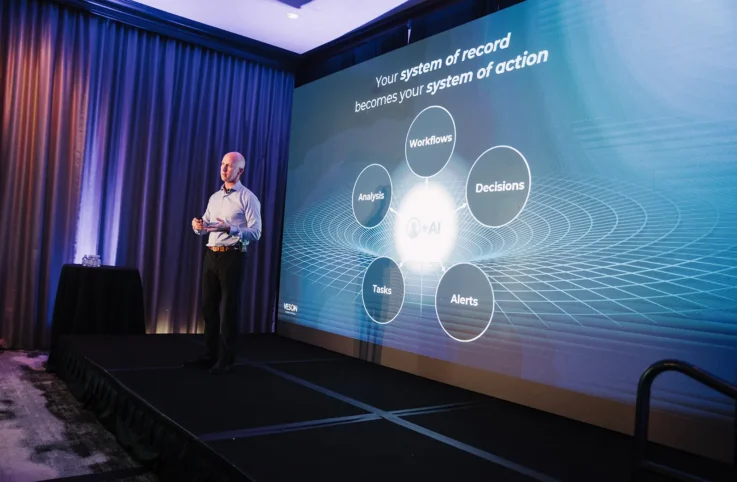
Data is what makes up the foundation of the system of record on which teams run their workflows and operations and bring decisions to the forefront.
“The decisions you make today and in the next several months are very foundational and will compound,” Chief Operating Officer Sean Riley said during his keynote remarks.
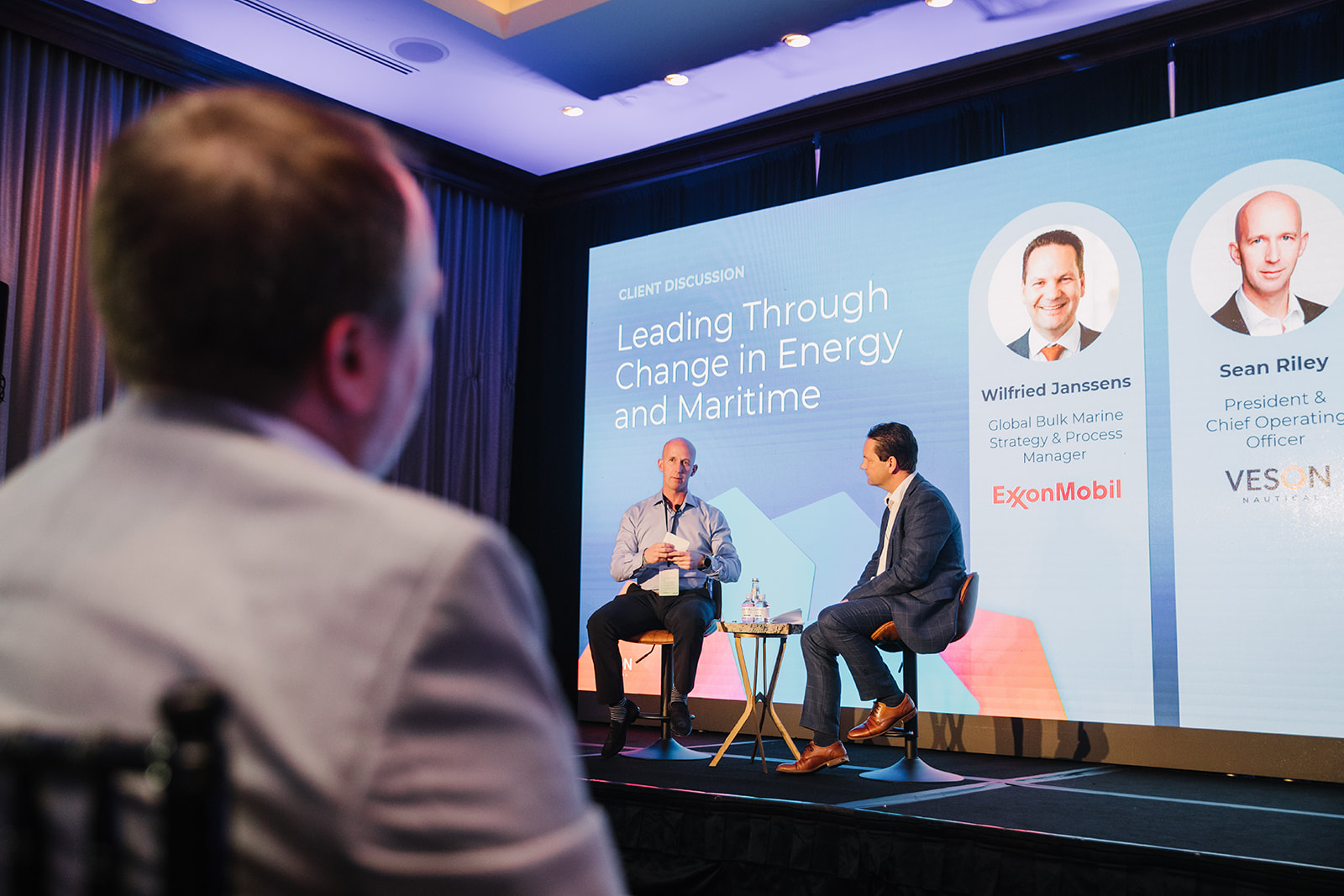
Sean explored these issues further during an onstage conversation with Exxon Mobil Global Bulk Marine Strategy and Process Manager Wilfried Janssens, where they discussed how Exxon is adopting AI at scale.
In looking at how Janssens approaches managing large-scale digital change, he said “I think number one is the people. We really need to think about these transformations as change management efforts. . . really bringing our people along.”
With the Veson Platform and CoCaptain, teams have trusted and predictable AI powering their workflows, enabling greater collaboration, and efficiency. By bringing IMOS, Mail, Vessel Insights, and Bunker Insights onto one cohesive platform, users have a singular foundation and workspace across solutions.
“The goal here is not just to have all these products coming into one space, but to rethink how they integrate together and how our AI can take advantage of that integration,” Chief Product Officer Christine Sullivan said during her deep-dive session on the Veson Platform. “This then becomes the seamless foundation for where workflows can exist between our product ecosystems.”
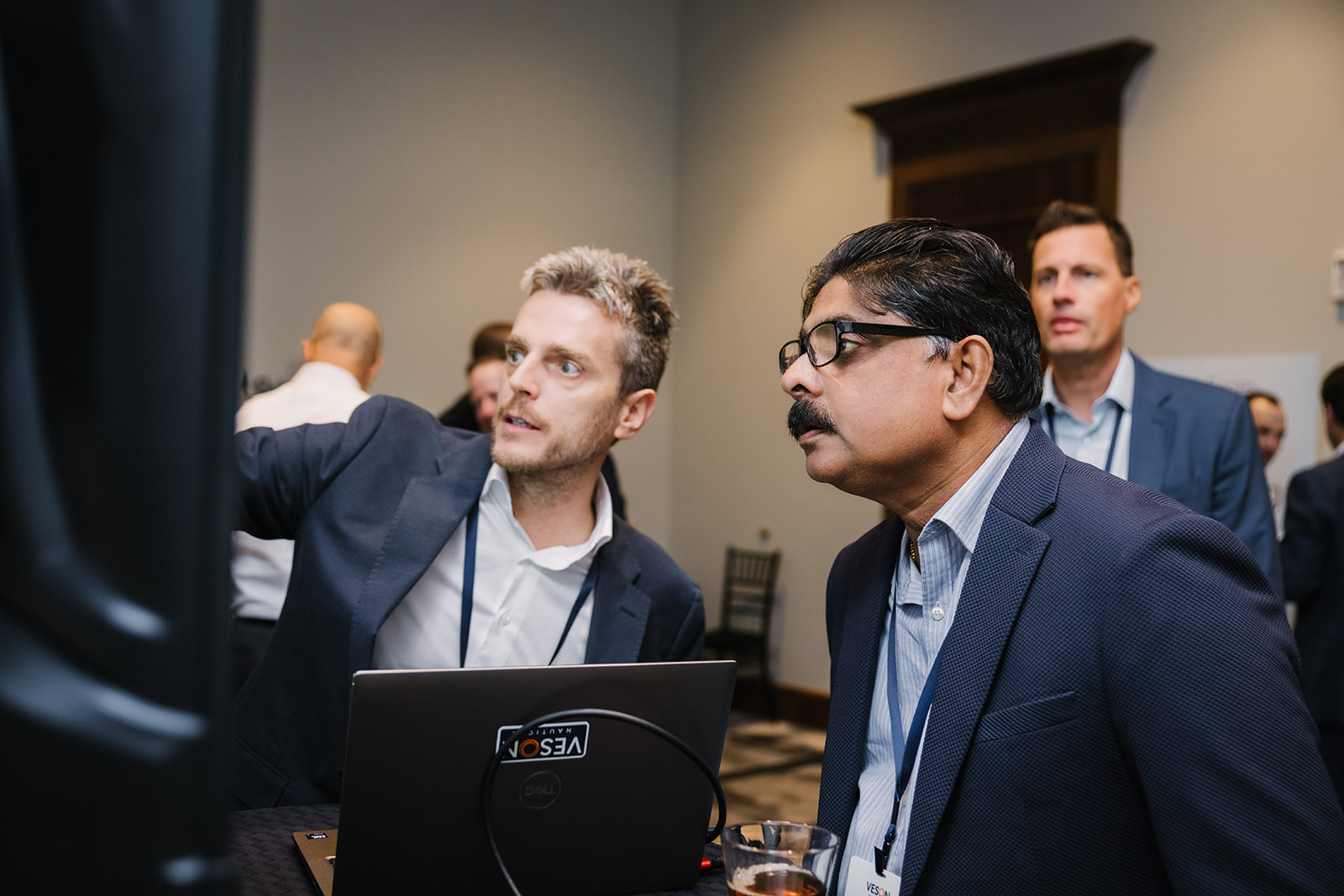
A Peak at What’s Next
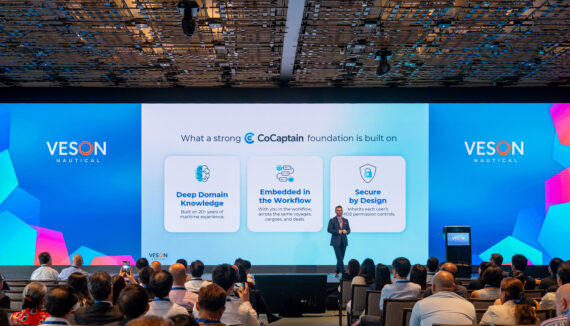
What makes CoCaptain such a powerful tool is its use of deep domain knowledge to analyze data and provide fast answers regarding voyages, operations, and more.
Principal Product Manager Clarissa Brown offered attendees a look at where Veson is headed next with CoCaptain, and how we are building AI tools that can give clients nuanced answers for complex voyages, while also prioritizing easy collaboration, trusted security, and controlled access. Using large language models and AI solutions responsibly is vital, Clarissa said, particularly as we move towards AI that can assist in carrying out workflows start to finish.
“The strong foundations here for CoCaptain are really what we focus on, and that is deep domain knowledge.”
How to Adapt for New Technologies
As Veson launches new capabilities, a key component of client success is long-term adoption.
“Deploying the technology is fast. That’s not the hard part. That’s the tip of the iceberg,” Senior Director of Professional Services James Morgan said during his session with Principal Consultant Jay Campbell. “Actually taking a system and configuring it to work for your business is where the challenge lies.”
Teams need to start by defining the business objective and goal behind any new tech implementation. Next, they need the data to make it happen. The old adage of “garbage in, garbage out” remains the same when it comes to needing quality, verified data, James said.
“Our technology’s gotten fancier, it’s gotten faster, but it’s only as good as what you feed,” James said. “If we go out and buy the nicest car on earth, but we put bad gas in it, it’s going to stall out halfway down the road.”
The Power of Data Science
Making the most of data was the same throughline in Senior Data Scientist Luca Bonfiglio’s session on how Veson uses data science principles to fill in the gaps when market information is scarce.
“How do we produce a model that is equally reliable in a big port where we do see many activities, but also in a small port where the data doesn’t support us?” Luca said.
Bunker Insights uses data science to help charterers and traders validate quotes, price voyages, and understand fuel cost exposure, with daily prices for 9,000+ ports and forward curves for negotiations. Trained on hundreds of thousands of anonymized transactions, its confidence bands show when volatility makes a price misleading.
Vessel Insights does the same for vessels. Wind, waves, hull fouling, and draft can make two similar voyages burn different amounts of fuel, so a physics-informed model sets vessel-specific consumption curves. Before fixing, chartering teams can compare candidate vessels like for like and estimate voyage P&L on consistent consumption figures.
What’s Next?
Chief Development Officer Chris Barnes closed out the day offering an inside look at some of the experimentation and innovation happening at Veson. Chris leads Veson’s engineering team in testing and iterating on some of the industry’s emerging technologies and how they can be put to use for Veson clients.
His session highlighted a key theme of the summit — change across maritime is inevitable, but it’s up to every team to ensure they are proactively playing a role in shaping what comes next. At Veson, we’re committed to helping clients make the most of AI to not only keep up with the pace of change, but to set the tone for the future of the industry.
Join the Conversation
The Summit Series continues next year, beginning with Veson’s London Summit on February 11 and the Tokyo Summit on March 10. Join us and be a part of the conversation to shape the next era of maritime innovation.