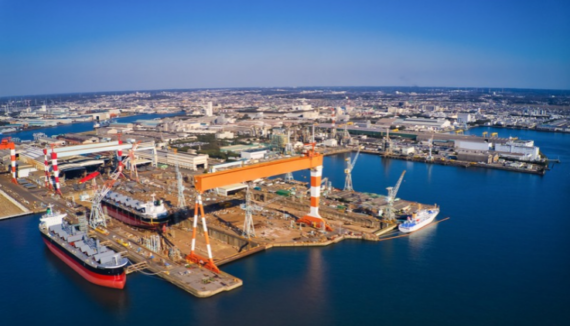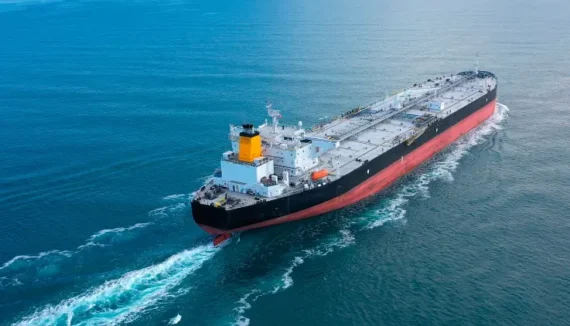

The Strait of Hormuz crisis has shaped sentiment across both the Tanker and Bulker markets this year, disrupting established trade routes and driving voyage costs as owners navigate rerouting, higher bunker expenses, and elevated risk. Despite these near-term pressures, buying appetite has remained strong and secondhand values firm, reflecting continued confidence in asset fundamentals and a longer-term view of tonnage demand.
Using VesselsValue data, we examined the buyers who have topped the charts with secondhand purchases in 2026 to date. Here is a breakdown of the top companies splashing the cash this year in both the Bulker and Tanker sectors in terms of the number of vessels purchased and by total spend.
Bulkers
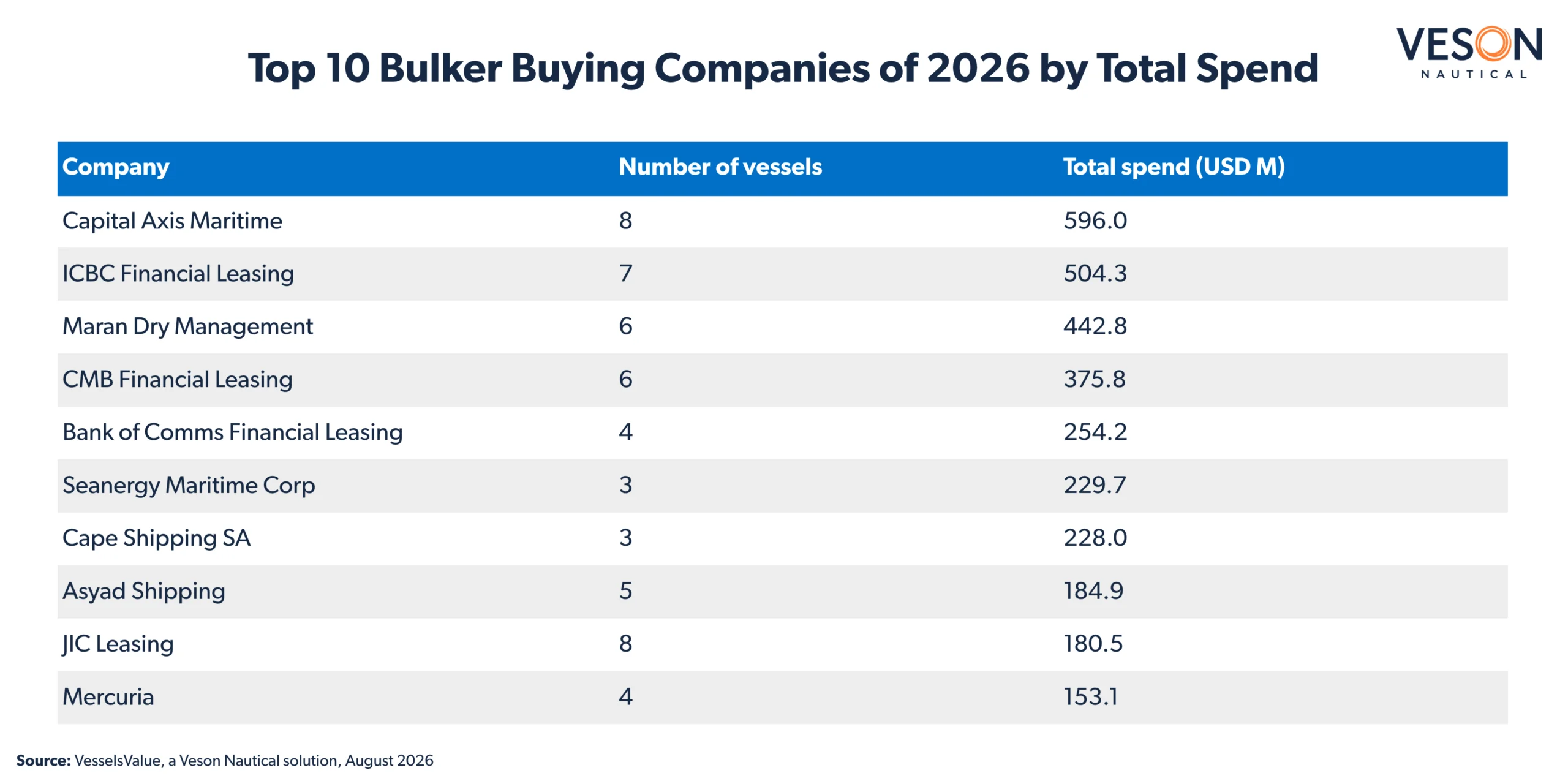
So far this year, Capital Axis Maritime and JIC Leasing rank joint first by number of Bulkers purchased, each picking up eight vessels. In terms of total spend, Capital Axis Maritime tops the charts with USD 596 mil, well ahead of ICBC Financial Leasing in second place on USD 504.27 mil for seven Bulkers.
Maran Dry Management Inc rank third by spend, having committed USD 442.8 mil across six Bulkers, closely followed by CMB Financial Leasing on USD 375.77 mil for the same number of vessels. Bank of Communications Financial Leasing rank fifth with USD 254.24 mil spent on four Bulkers.
Buying activity has continued at pace despite the disruption caused by the Strait of Hormuz crisis, with owners taking a longer-term view of asset values even as Cape of Good Hope rerouting and higher bunker costs have squeezed voyage economics in the near term. Secondhand values have remained firm across the board, supported by an ageing global fleet and limited newbuilding deliveries in the near term.
Looking ahead, buying activity is likely to stay concentrated among owners renewing older tonnage, with secondhand values expected to hold up as long as newbuilding deliveries remain limited relative to fleet age. Any easing in Hormuz-related disruption would likely take some of the urgency out of the market, though the underlying support from an ageing fleet should persist regardless.
Tankers
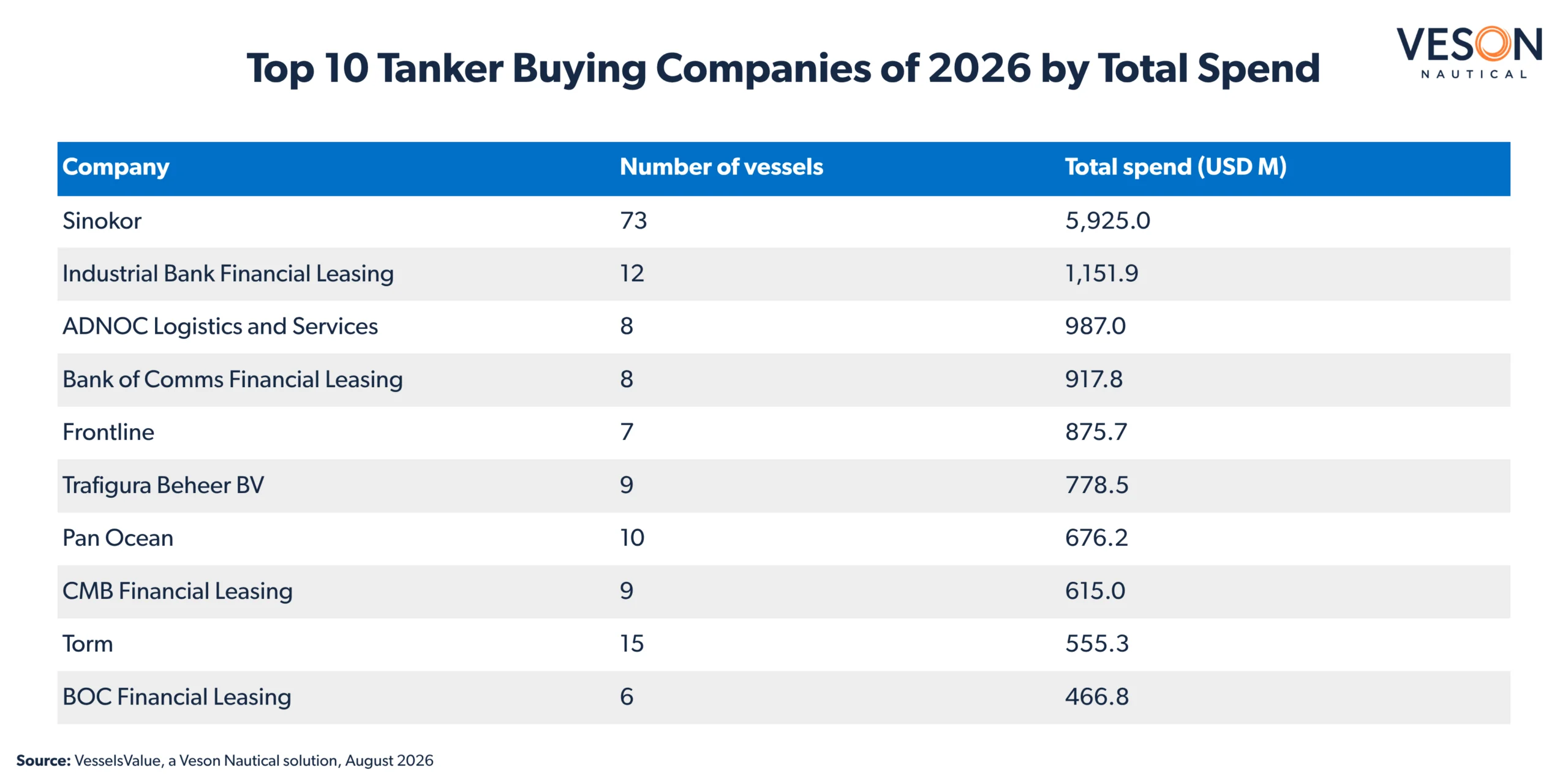
Sinokor has dominated Tanker buying so far this year, purchasing an extraordinary 73 vessels for a combined USD 5,925 mil, putting them far ahead of the rest of the field on both count and spend.
Industrial Bank Financial Leasing rank second by spend with USD 1,151.9 mil across 12 Tankers. ADNOC Logistics and Services spent USD 987 mil on eight Tankers, while Bank of Communications Financial Leasing spent USD 917.8 for the same amount. Rounding out the top 5, Frontline spent USD 875.7 mil for seven vessels.
The Strait of Hormuz crisis has been the dominant force behind Tanker market sentiment this year, with AIS-verified data showing a marked shift in vessel transit patterns through the Persian Gulf as owners and charterers weigh the risks of the region. This has fed directly into asset prices, with secondhand values pushed to some of their highest levels in years as demand for Tankers able to operate flexibly across alternative trade routes has intensified. The scale of Sinokor’s buying spree in particular reflects this appetite, with owners continuing to compete aggressively for tonnage even as freight markets absorb the cost of rerouting and elevated insurance premiums tied to the ongoing crisis.
The scale of Sinokor’s buying spree stands out even against a busy year for the sector: since the start of 2026, the company’s 70 Tanker purchases for a combined USD 5.8 bil is roughly equal to the combined spend of the next eight biggest Tanker buyers put together.
Four of the 10 biggest Tanker buyers by spend this year are Chinese financial leasing houses, Industrial Bank, Bank of Communications, CMB and BOC Financial Leasing, together accounting for over USD 2.85 bil, meaning a good share of this record activity reflects sale-leaseback structuring rather than straightforward ownership change.
Whether this pace of buying continues will depend largely on geopolitics and how Hormuz situation evolves. With VLCC values already at levels not seen since 2008, the more likely path from here is a levelling off rather than further acceleration, though owners with older fleets may still find it an attractive window to trade up before any correction takes hold.
Download the 2026 Mid-Year Shipping Market Report to take a closer look into secondhand transactions the first half of the year, and bookmark this blog to stay updated on how tensions in the Middle East will continue to impact the market.