With Veson’s Singapore Summit approaching and Marine Money’s Singapore conference marking its 25th anniversary this year, this makes a fitting backdrop for taking stock of how the region got here. Using VesselsValue data, we track the evolution of newbuilding and secondhand values, what’s being ordered and where, and the top five Asian and Middle Eastern orderers so far this year.
25 Years of Fixed Age Value: 2001-2026
Values are currently sitting at or close to record highs across every segment we track, a strong signal of market strength, particularly set against 2004-2008, when a pre-financial-crisis commodity and freight boom, combined with tightening yard capacity, drove prices to the last comparable peak. These values are based on VesselsValue’s Fixed Age Value methodology, which strips out natural depreciation, so each figure reflects the market alone, not a vessel simply ageing another year.
Several forces are pushing prices toward these levels today. Top-tier Asian yards are running some of their fullest orderbooks in years, limiting available slots and giving builders more pricing power. At the same time, owners are racing to lock in modern, fuel-efficient and dual fuel tonnage ahead of tightening emissions rules, adding further demand on top of an ageing global fleet that increasingly needs replacing.

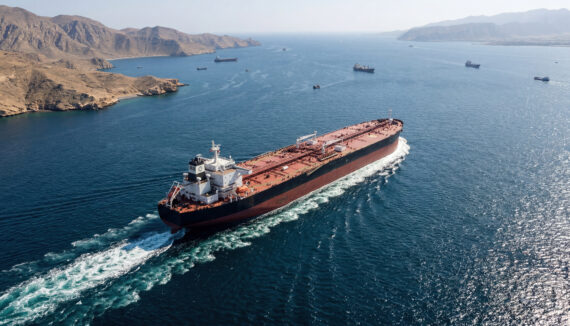
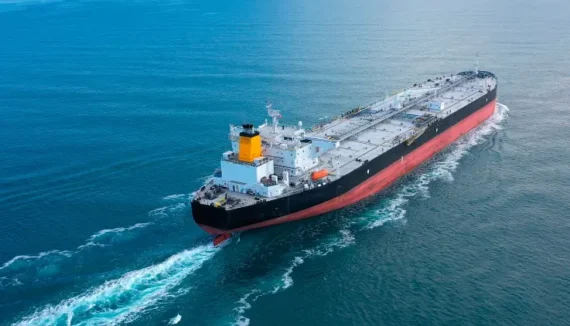
Tankers are leading the surge in values, and Asia is the driving force behind this. One-year VLCC charter rates are up 174% year on year, 5- year-old VLCC values are up 125% versus their historic median, and Tanker newbuilding orders and options are up 358% so far in 2026 versus the same period last year
This uptick, spanning newbuildings and secondhand vessels, is largely due to recent owners such as ADNOC Logistics and Services, who purchased nine VLCCs, combined with increased ton mile demand driven by the situation in the Strait of Hormuz. Additional risk premiums are also being factored in for vessels delivering in this region.
Global newbuilding deliveries have climbed by c.21% over the last five years as yards absorb sustained demand across the Bulker, Tanker, and Container segments.
Top 5 Asian Buyers
Sinokor leads the top five Asian and Middle Eastern buyers with 74 vessels worth USD 6.16 bil, almost entirely comprised of Tankers. Three of the top five, Bank of Communications Financial Leasing, ICBC Financial Leasing, and HuaXia Financial Leasing are Chinese leasing companies, together accounting for USD 5.35 bil (41%) of the group’s spend, a reminder that much of the region’s ordering is now financed through leasing structures rather than direct ownership.
ADNOC Logistics and Services is the clearest Middle East presence, with 22 vessels worth USD 1.67 bil, weighted toward Tankers and OSVs. Across the top five, Tanker and LNG newbuildings account for over 80% of the total spend, underscoring just how much of today’s newbuild valuations are being driven from these sub sectors.

Top 5 Asian Shipyards by On-Order Value
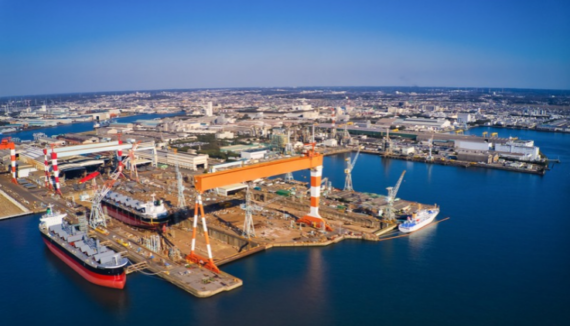
The top five Asian shipyard rankings are based on a live snapshot of each shipyard’s current on-order orderbook, valued at today’s market prices with South Korea and China filling every place in the top five, due to their production of large-scale, high-value vessels such as VLCCs, LNG/LPG carriers and Container ships. China’s relative newcomer, Hengli Shipbuilding, tops the list on sheer scale, an orderbook of 495 vessels across Bulkers, Tankers, and Containers, while the next four yards hold smaller, higher-value orderbooks concentrated in VLCCs, LNG/LPG carriers, and Containers.
Japan remains a significant shipbuilding nation, but its yards lean toward specialised tonnage, which keeps them just outside this particular ranking. It should also be noted that four of the five yards in this ranking, all but Hengli, are heavily weighted towards VLCC, LNG, LPG, or Container carriers, which tend to be high-ticket values.

Looking Ahead
Whether newbuilding prices hold near these levels will likely depend on how long yard capacity stays this tight, and there’s little sign of it easing. Top yards are booked out for years, and demand for modern, dual-fuel tonnage keeps rising against an ageing global fleet.
What’s striking is how concentrated both sides of that market have become: a handful of yards — Hengli on scale and the Korean majors on value — account for most of the orderbook. The buying side looks just as narrow, with Chinese leasing companies and Sinokor’s Tanker purchases dominating activity and ADNOC Logistics and Services signalling the Middle East’s own growing role. As long as that concentration holds on both ends, the pricing pressure probably will likely remain.