
2025 has been a year defined by disruption. While maritime has always been a complex industry marked by evolving challenges, this year brought particularly fraught obstacles. Security threats in the Red Sea, shifting global trade under renewed tariffs, and accelerating technological and regulatory changes have reshaped the maritime landscape. Companies across the sector were pushed to adapt, optimize, and stay resilient in new, more dynamic ways.
At Veson, this environment has reinforced our founding priority to help clients do more than react. Our mission is to enable them to anticipate challenges, plan proactively, and seize the opportunities that emerge in periods of volatility. The past year made one thing clear: today’s compounding complexity is not just a storm— it’s the climate. Success now depends on visibility, agility, and data-driven foresight.
Here are the top five challenges that defined the maritime industry in 2025 and how Veson clients met them head-on.
1. Adapting to Tariff-Driven Trade Disruption
The Trump administration’s tariff policies dramatically reshaped global trade flows in 2025, creating short-term rate spikes and long-term structural changes. The ripple effects of the tariffs have been far-reaching — in dry bulk, for instance, the levies caused a decline in Chinese import volumes of U.S. grain and soybeans, presenting similar short-term potential benefits for shipowners, but long-term market concerns if higher costs lead to a drop in overall grain trade.
The whiplash nature of new trade policies also created a difficult operating environment, as companies struggled to plan for voyages amid continually changing tariff and port fee structures. In April, the Trump administration unveiled a proposal to impose new port fees on Chinese-made vessels, adding potentially millions of dollars in costs. Then in November, the administration announced a one-year suspension on the fees, after some companies had already shifted port rotations and removed tonnage from some voyages to limit costs.
To stay ahead, Veson clients leveraged VesselsValue to adapt their vetting process to include the country of build. Through Shipfix, clients have harnessed live market screens and collaboration tools to uncover emerging opportunities and turn market turbulence into strategic advantage. The ability to translate data into action has helped them capture value even amid policy-driven instability.
2. Meeting Rapidly Evolving Environmental Regulations
While the IMO delayed passage of its new Net Zero Framework in October, regulatory momentum continues, as compliance with CII, EU ETS, and FuelEU has become a top priority. This focus is also driving innovation, with a majority of maritime shipping professionals noting that lowering emissions will require breakthroughs like new fuel types, ship designs, and other technologies.
Veson is deeply committed to helping clients lead this transformation. Our chartering and operations workflows enable teams to commercially optimize sustainable voyages and assess emissions impact directly in their day-to-day work. Rather than waiting for the next rule to take effect, we’re building adaptable solutions today and empowering clients to meet compliance requirements while strengthening their sustainability strategy.
3. Navigating Red Sea Security Risks
Since late 2023, instability in the Red Sea has created widespread trade route disruption, extending voyages, increasing costs, and straining global supply chains. Charterers have had to pivot rapidly, sending ships away from the Suez Canal and around the Cape of Good Hope or through the Panama Canal to ensure safety and continuity.
For Veson clients, navigating these obstacles has meant leveraging tools that can spot security risks early on and allow them to make swift decisions. They’ve leveraged routing configuration in IMOS to evaluate options and set their preferred route. IMOS tasks and alerts enabled clients to automatically communicate operational risks across teams. This proactive visibility has proven critical for maintaining control and efficiency amid geopolitical uncertainty.
4. Managing Risk in the Era of the Dark Fleet
Western sanctions on Russian oil producers have reconfigured global energy trade and split the VLCC market into parallel systems. The rise of the so-called “dark fleet” that operates outside mainstream regulations has tightened supply and raised due diligence requirements for compliant operators.
VesselsValue has provided critical intelligence on dark fleet growth and its effects on tanker rates, while counterparty management tools in IMOS have helped clients vet vessel ownership, history, and compliance status. Centralized, transparent vetting has become essential to minimize regulatory exposure. As the dark fleet surpasses 700 vessels, disciplined counterparty management is not just good governance but a competitive necessity.
5. Harnessing AI to Elevate Human Efficiency
The adoption of artificial intelligence across maritime has accelerated rapidly in 2025, unlocking new efficiencies in chartering, collaboration, and voyage settlement. Yet, the most effective applications keep human decision-making at the center.
At Veson, one area in which we’ve embedded this philosophy is in claims management. Veson’s claims solution featuring CoCaptain AI, automates routine claims management tasks while ensuring that human experts remain in control. By extracting key data from emails and documents and organizing them in a central workspace, CoCaptain eliminates tedious tasks and offers a streamlined workflow. This is one of many examples being developed across the Veson platform, where AI can add significant efficiency and ROI to day-to-day workflows.
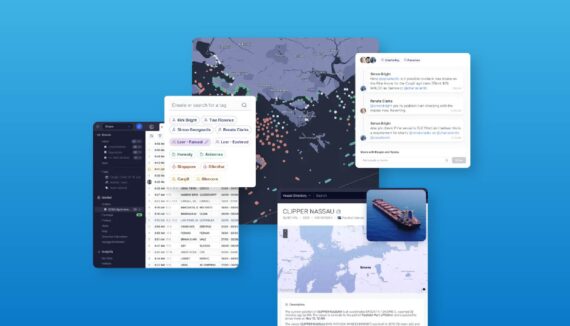
AI can also help to bridge communication gaps between chartering and operations teams. Shipfix Mail, our AI-powered email solution, automatically parses, organizes, and tags emails to easily filter relevant content and spot often-missed market opportunities. Teams can use shared inboxes and calendars for enhanced visibility and collaboration, as well as leverage a centralized activity workspace. Like Claims CoCaptain, our use of AI in Shipfix aims to enhance human work and help teams make faster, smarter decisions.
Looking Ahead: Turning Complexity into Opportunity
If 2025 proved anything, it’s that complexity is here to stay. New geopolitical dynamics, regulatory changes, and technological advancements will continue to shape the maritime landscape in 2026 and beyond. The companies that thrive will be those that plan strategically, collaborate effectively, and leverage technology to stay agile.
At Veson, we remain committed to empowering our clients with the visibility, intelligence, and adaptability needed to navigate uncertainty with confidence. Volatility, when met with the right tools and mindset, becomes more than a challenge, it becomes a catalyst for innovation and long-term growth.