The Challenge
Supporting enterprise-scale maritime operations with greater connectivity, transparency, and AI readiness amidst increasing complexity
The Solution
Expanded its Veson partnership to combine operational workflows, market intelligence, AI, customer communications, and more in a connected maritime ecosystem.
Key Results
- Real-time visibility
- Faster cross-functional decisions
- Scalable AI adoption
- Real-time transparency delivered to customers
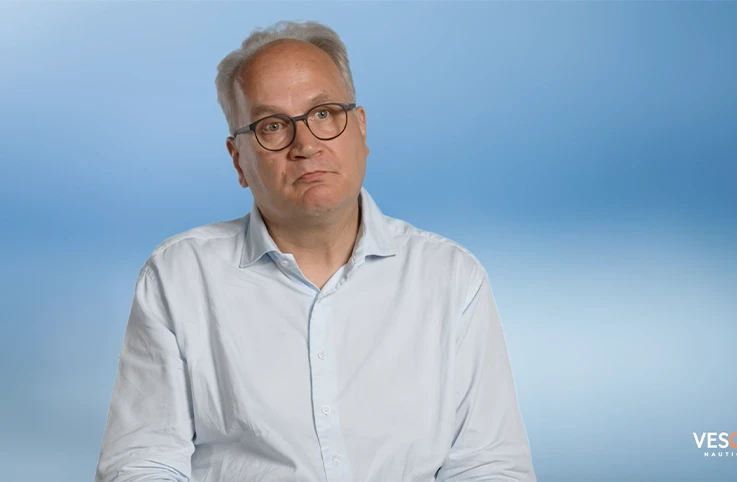
With over 12 years of IMOS experience, Cargill Ocean Transportation has steadily expanded its engagement with Veson. In recent years, the company moved to an Enterprise Agreement, incorporating solutions like Shipfix, Oceanbolt, and additional platform capabilities into its operations. For Rene Griener, Senior Director of Data, AI & Digital, these tools – and the strong collaborative partnership between Cargill and Veson – are essential for managing change and complexity in a rapidly evolving maritime industry.
Building a collaborative foundation for digital transformation
When Rene joined Cargill Ocean Transportation in 2022, the IMOS Platform was already an established part of the technology stack. But the company’s relationship with Veson has deepened significantly since then.
“We recently upgraded our engagement with Veson to an Enterprise Agreement, and we use many more systems now,” Rene explains. “And with this, basically, we can really create a kind of joint journey, which is important because in this modern world, and AI is now coming, the world becomes somehow easier but also more complex. And complexity you can only manage if you collaborate closely.”
This shift to a strategic partnership model has set the stage for joint innovation in areas like AI, process optimization, and data integration.
Bringing trading, chartering, and operations into one ecosystem
As early adopters of Shipfix, Cargill recognized its potential to support better decision-making across the business from the very beginning. Cargill’s recent expansion of Shipfix usage to vessel operators and the operational team has created a truly unified workspace.
“We can combine the trading and the chartering capabilities with the operator capabilities on one platform,” Rene says. “This gives us the benefit of having the two groups on the same platform, the same ecosystem, which makes it much easier for us to use the capabilities of the IMOS Platform.”
Delivering real-time transparency to customers with IMOS X
For Cargill, customer transparency is a high priority – and a key driver of efficiency. Before IMOS X, voyage updates often required long email threads and unstructured data exchanges.
“With IMOS X now, we have a standardized way of sharing this information with the customer,” Rene says. “It’s very efficient for us and it keeps the customer and our own team on the same data and on the same transparency.”
This streamlined communication reduced operational burdens and delays for Cargil’s team and allows them to deliver a premier customer service experience.
Advancing AI capabilities through shared data
AI is a focus area for both Cargill and Veson, and data is the bridge that connects our efforts.
“The important thing is to combine the AI capabilities that Veson is building, and also our own AI capabilities,” Rene explains. “If you bring this together… we can have a much simpler life in our company and we become more efficient and also we can make better decisions.”
By integrating Cargill’s proprietary AI models with structured, secure data and AI capabilities within IMOS, Cargill is positioning itself to thrive in shipping’s digital future.
Balancing build vs. buy in digital transformation
Rene emphasizes that not every technological challenge calls for in-house development. The decision often comes down to scalability and specialization.
“It’s very important not to build tools which are in better hands like with Veson,” he says. “However, there are areas where we know it’s very Cargill-specific, and probably every organization has specific processes and capabilities you need to build. And that’s an area where I think a company should spend effort… So basically, we want to bring together our own specific capabilities with the best practice market capabilities like Veson.”
This collaborative approach allows Cargill to fuse its own knowledge and needs with Veson’s unified maritime ecosystem. This unique blend allows Cargill to create their decision advantage in the market with full support and scalability.