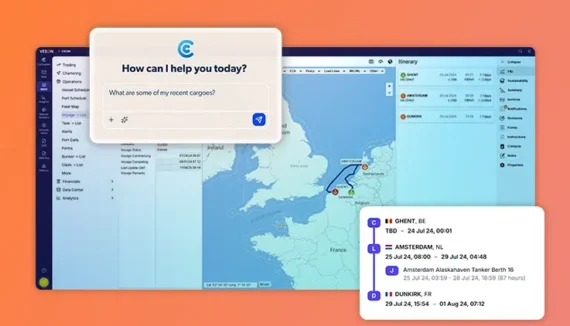

Shipfix is now Veson Mail within the Veson Platform, a new experience for IMOS that brings contextual AI, email, and validated market data together in one place. Explore more on Mail, a part of Connect, here.
In 2018, the shipping and commodity trading world had no shortage of headlines. The U.S.-China trade war was reshaping global trade. IMO emissions targets were forcing difficult decisions across the industry. Oversupply, volatile freight rates, and increasingly complex trade flows were testing commercial teams at every level.
At that same time, Shipfix was being founded. It wasn’t trying to solve all these macro challenges, but it was built to tackle something more specific that sat underneath them: how information moves through the industry.
Because behind the volatility and headlines, the day-to-day reality for charterers hadn’t changed. Critical market signals — cargoes, vessels, fixtures — were still buried in emails, scattered across teams, and impossible to structure at scale.
Solving that problem meant going deeper than traditional software at the time. It required building purpose-built natural language processing (NLP), a form of AI, to extract and structure data directly from communication. Years before the current wave of AI swept through the tech world.
That head start matters. With more than seven years of training, Shipfix’s AI isn’t a feature. It’s the foundation everything else is built on.
What the AI in Shipfix Actually Does
At its core, Shipfix’s NLP does one thing: it reads emails the way a human would, but at a scale no human could manage. Email is unstructured by nature; the NLP is what turns that unstructured communication into data that can actually be used.
It starts the moment an email arrives. Shipfix identifies what type of communication it is: a tonnage circular, a cargo order, a fixture recap, an operational update, or something else. That classification happens automatically, before anyone opens the message. It’s the starting point for everything else.
From there, the NLP extracts the unstructured data buried inside. For a cargo order, that means pulling out the load port, discharge range, cargo type, laycan, and quantity. For a tonnage circular, it’s the vessel name, open position, open date, and deadweight. None of this requires manual input, it is all handled by Shipfix.
What that means for your inbox
It means that the moment an email is processed, we can start applying email types, tags, and the data flows throughout Shipfix becoming searchable, filterable, and ready to act on.
Email types tell the product and users what kind of message it’s dealing with. A tonnage circular, a fixture recap, an operational update — each one is identified and classified before anyone opens it. That classification is what allows Shipfix to start organizing your inbox automatically rather than leaving everything in one undifferentiated pile.
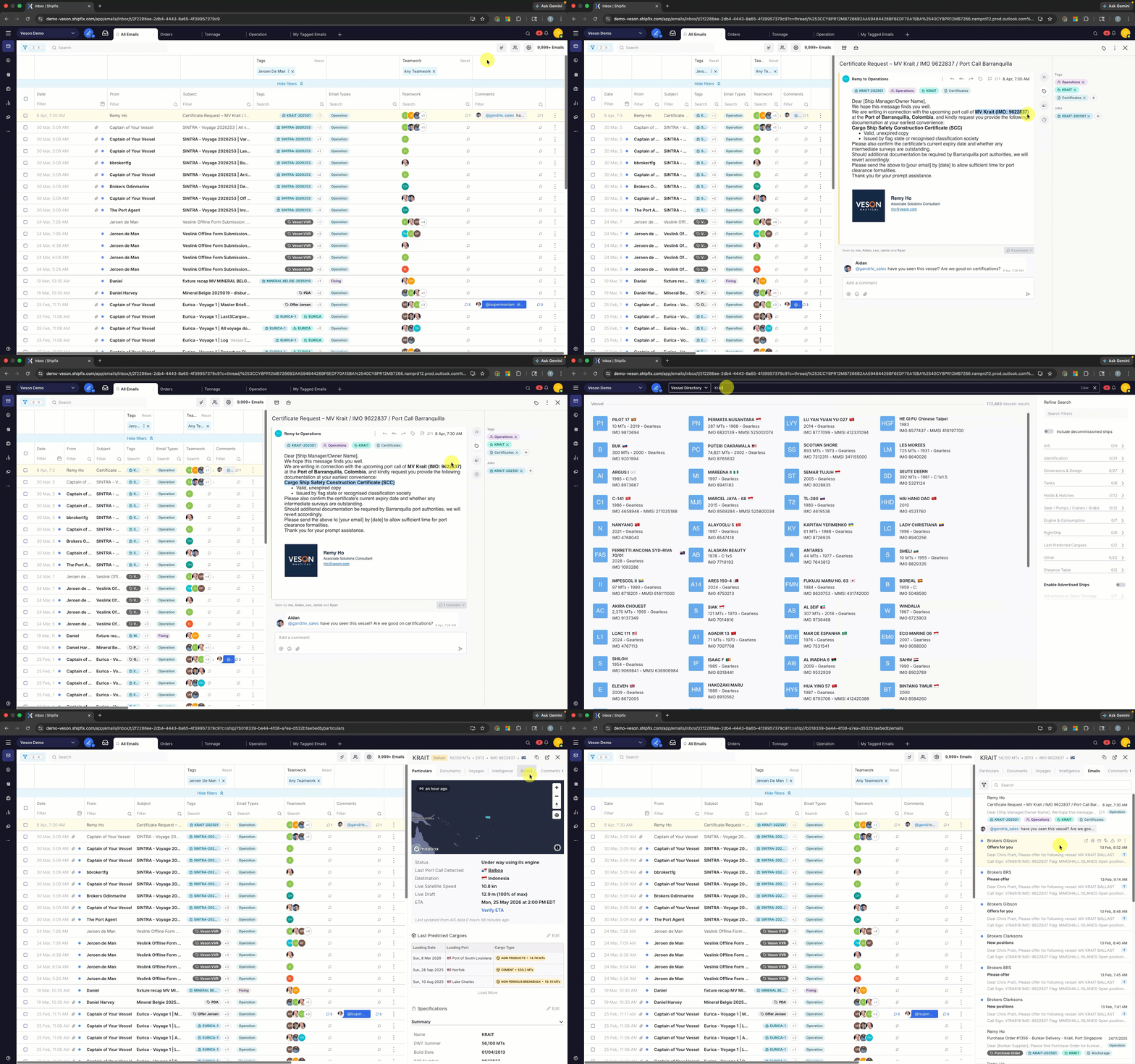
From there, the NLP identifies vessels, voyages, and cargoes within messages and auto-tags emails accordingly. For operational emails where a vessel is recognized, Shipfix automatically links that email to the vessel in the directory. For voyages, those emails surface within the IMOS voyages through our native connection to IMOS or through the proprietary Jobs board. Context travels with the object rather than staying buried in someone’s inbox.
That automatic recognition is the foundation. Users can build on top of it with their own tags, team routing, and rules to match how their organization works.
Where email becomes opportunity management
This is where your inbox becomes a competitive advantage. Every tonnage circular and cargo processed by Shipfix flows into Market Screens as a live, deduplicated view of the market.
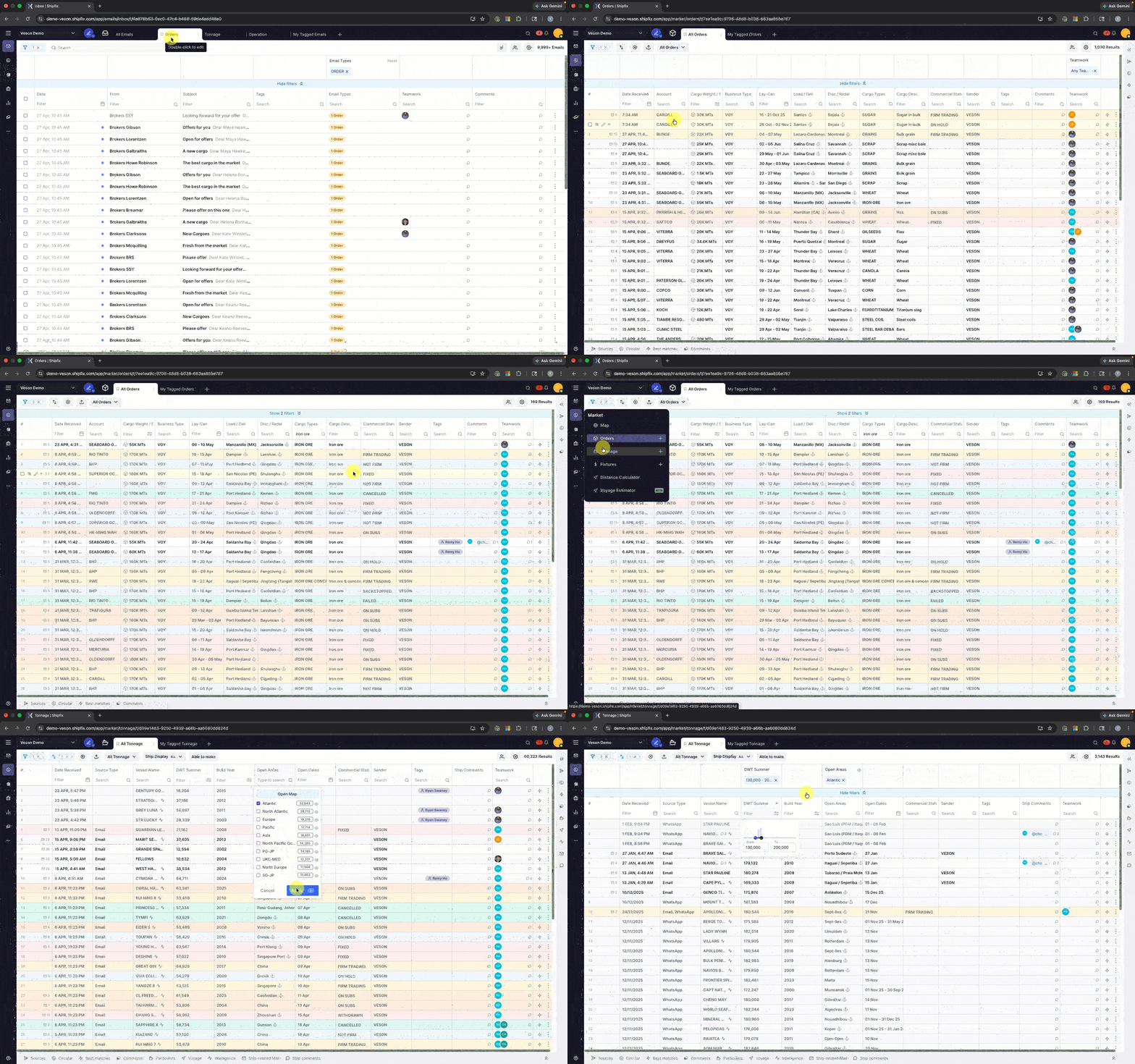
Market Screens consolidates cargo and tonnage positions from your inbox and your open market positions. Rather than reading through emails one by one, organizations can filter across the full market by vessel type, open area, laycan, cargo type, and more. A position that circulates across five brokers shows up once, not five times. The noise gets removed. What’s left are your opportunities. What started as unstructured email is now a market opportunity your team can act on.
Why the model keeps getting better
The model improves through a combination of client feedback and automatic error detection, a continuous refinement process that keeps it accurate as the market evolves. And because everything stays within the platform, there’s no data leaving to be processed elsewhere. No third-party model in between.
What are you leaving on the table?
Shipfix was founded in 2018 to solve a specific problem. Critical market information buried in unstructured communication is impossible to act on as scale. What’s been built since then is the answer to that problem.
For teams still manually sorting through inboxes, re-entering position data, and piecing together a market view from scattered emails, that gap is only getting wider. The market doesn’t slow down while you’re doing the work that technology could be doing for you. AI-powered capabilities in Shipfix help ensure you don’t leave unknown possibilities on the table.
Curious to see more about what Shipfix can do for you in your day to day? Access this on-demand recording, where Veson experts will give you an inside look at how Shipfix brings structure to your communications and workflows, connecting desks across your organization.