
When a crisis reprices every assumption in your book simultaneously, the operators who recover fastest are the ones who know exactly where to look and what to do about it.
When markets move faster than your voyage estimates, P&L visibility breaks down and the cost of that gap compounds quickly. Fuel costs spike, freight rates reprice daily, insurance premiums surge, and the routing decisions your team makes under pressure can mean the difference of seven figures on a single voyage.
The good news: if you are running IMOS, you already have the tools to stay in control. Five capabilities in particular are designed exactly for conditions like these. I have worked with hundreds of client teams through major disruptions over the years, and the value of these tools is significant. Here is a look at these five strategies and how to activate these capabilities in IMOS.
1. Reframe your voyage estimates
How do you keep voyage estimates in sync with market rates when bunker prices are moving daily?
Most voyage estimates are built on point-in-time inventory assumptions. In a stable market, that is fine. In a market where freight rates and bunker prices are drastically moving daily, it means your estimated P&L could be greatly impacted the moment conditions shift.
Within the IMOS Trading & Risk module, users can set a configuration that connects Voyage Estimates directly to live trade route and bunker symbol pricing. Instead of basing estimates on the current inventory on the vessel, your estimates pull in current live market rates to factor into your estimates. The result is an estimate that reflects what the market is actually doing.
For teams managing reroutings, alternative bunkering ports, or voyages that were priced pre-crisis, this is the difference between flying blind and having a real-time picture of where your margins actually stand.
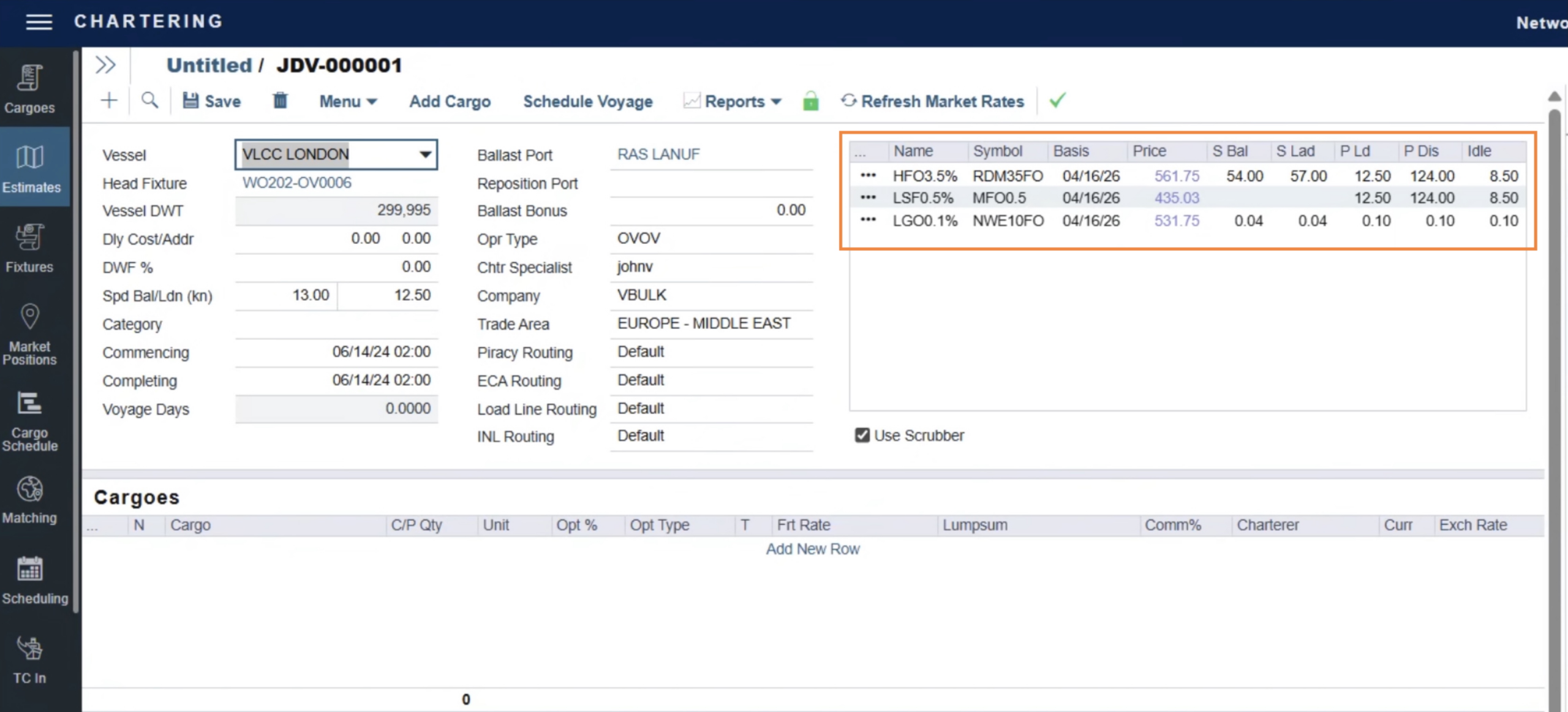
My advice: Incorporate market-based pricing into your voyage estimates. Once enabling the configuration, having real-time market visibility at the point of estimation gives you a sharper lens on every evaluation.
2. Build systematic visibility across your exposed fleet
How do you identify fleet-wide P&L exposure without reviewing every voyage manually?
When you are managing 50, 100, or 300 vessels, you cannot manually review every voyage for Gulf exposure. You need the system to surface the risk for you.
The Tasks & Alerts engine in IMOS allows you to configure automated rules across vessels, voyages, estimates, and port calls. In the current environment, there are four alert types I have been recommending to every team I work with:
- Itinerary-level alerts: Flag any vessel with an active voyage that includes an AG/Persian Gulf port in its itinerary to get instant visibility into your exposed fleet
- Estimate-level alerts: Warn chartering teams when a new estimate includes load/discharge ports in the affected zones
- Voyage-level alerts: Trigger notifications when a voyage’s itinerary changes to include or re-route around Hormuz-dependent ports
- Insurance/compliance triggers: Alert ops teams when vessels enter designated high-risk areas so war risk insurance adjustments can be made proactively
The broader point is that crisis monitoring should not depend on individual vigilance. Tasks & Alerts turns it into a systematic process that scales across your entire fleet.
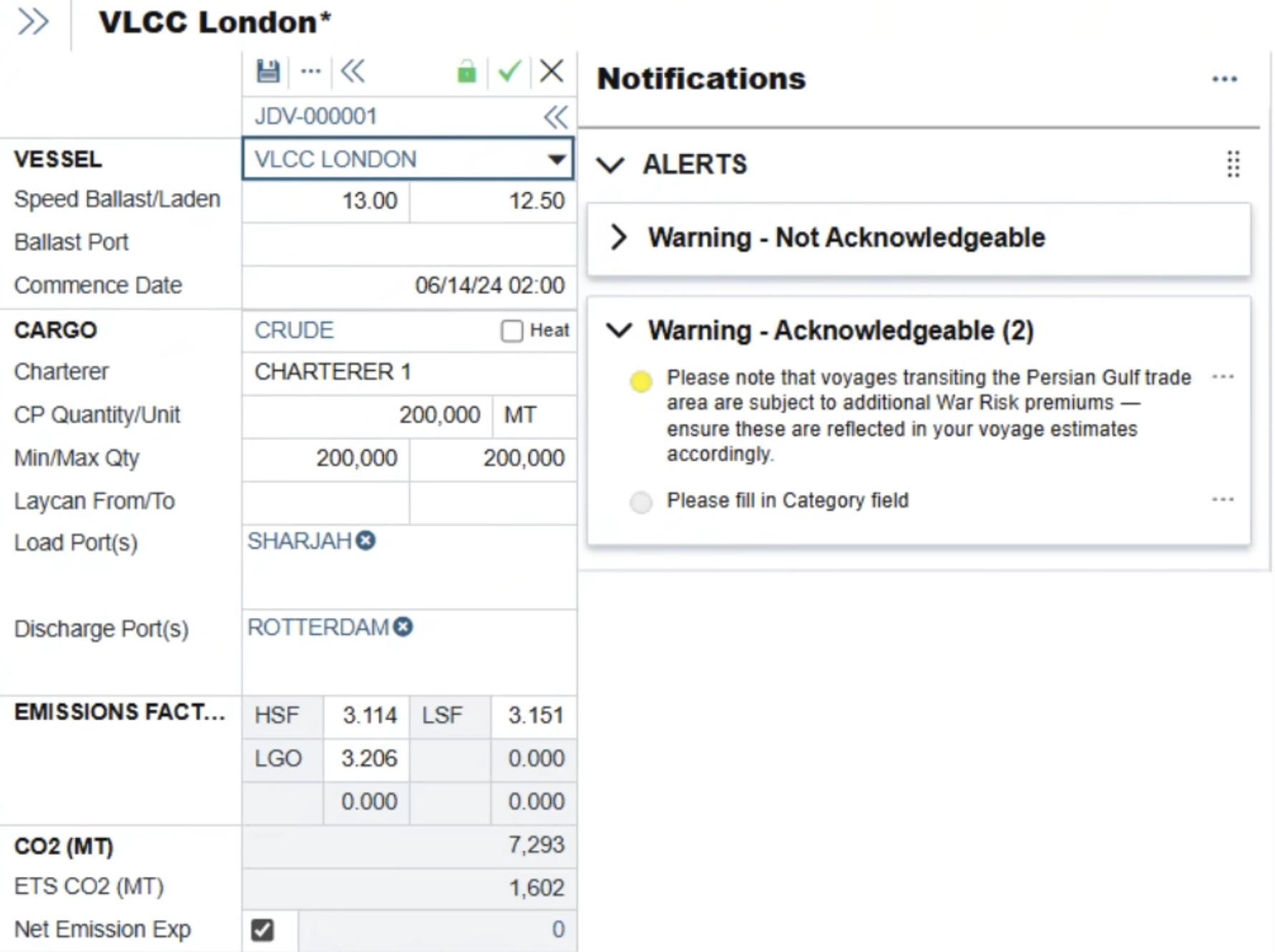
My advice: If you have not configured Tasks and Alerts, this is the highest-leverage configuration change you can make right now. We can help you set up the rules within a single working session.
3. Protect your margins with bunker swaps
How do you protect your P&L from further fuel cost volatility on forward voyages?
Bunker prices have moved sharply since the Hormuz closure began, and the market remains volatile. For operators with forward voyage commitments built on pre-crisis fuel assumptions, that exposure is not theoretical, it is a direct margin risk.
IMOS allows you to enter, manage, and mark-to-market bunker swaps and options directly within the Trading & Risk module. Crucially, swaps can be linked to specific voyages, so the hedge P&L flows through to the voyage P&L, giving you a true picture of your net fuel cost rather than treating the hedge and the voyage as separate entries.
Within IMOS, by linking Bunker Swaps to contracts, you will gain visibility into hedge positions and their mark-to-market performance against forward bunker curves.
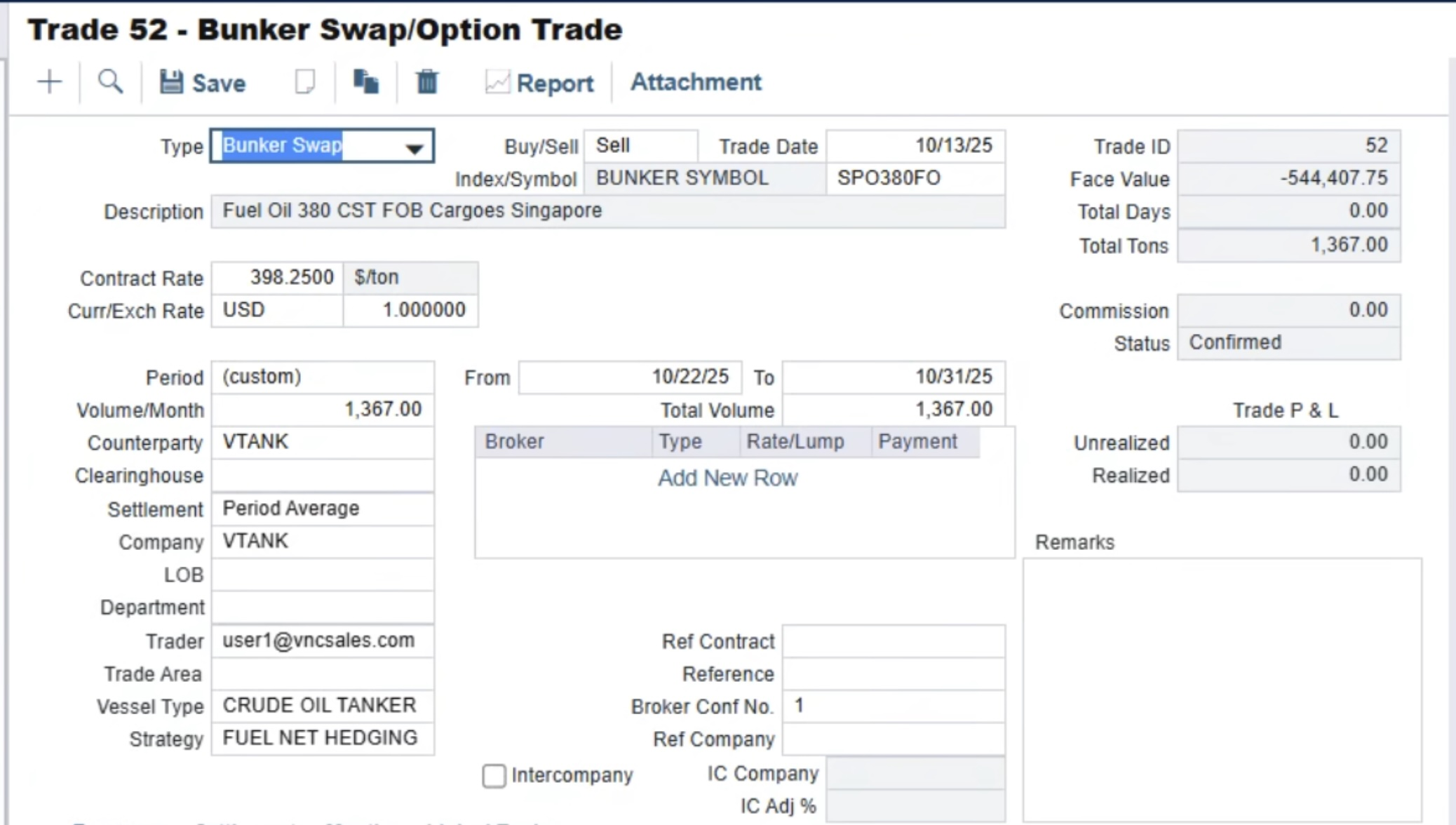
My advice: If you have unhedged bunker exposure on forward voyages, the time to act is now. Use the Bunker Swap workflow to lock in rates and protect your margins.
4. Preserve the baseline — P&L snapshots for variance analysis
How do you quantify the P&L impact of a disruption for reporting and claims?
One of the most practical things you can do in a rapidly evolving situation is preserve a record of where your voyage economics stood before rerouting decisions were made. This is what P&L Snapshots are for.
The Voyage P&L in IMOS shows Estimate, Actual, and Variance side by side. Snapshots let you capture a point-in-time view of that picture as conditions change, creating an audit trail that documents the impact of each routing decision, bunker price movement, or demurrage settlement on the voyage’s financial outcome.
Whether you’re documenting voyage performance for internal reporting, supporting a charterer negotiation, or substantiating a claim with your insurer, snapshot data gives you the evidence to back every decision.
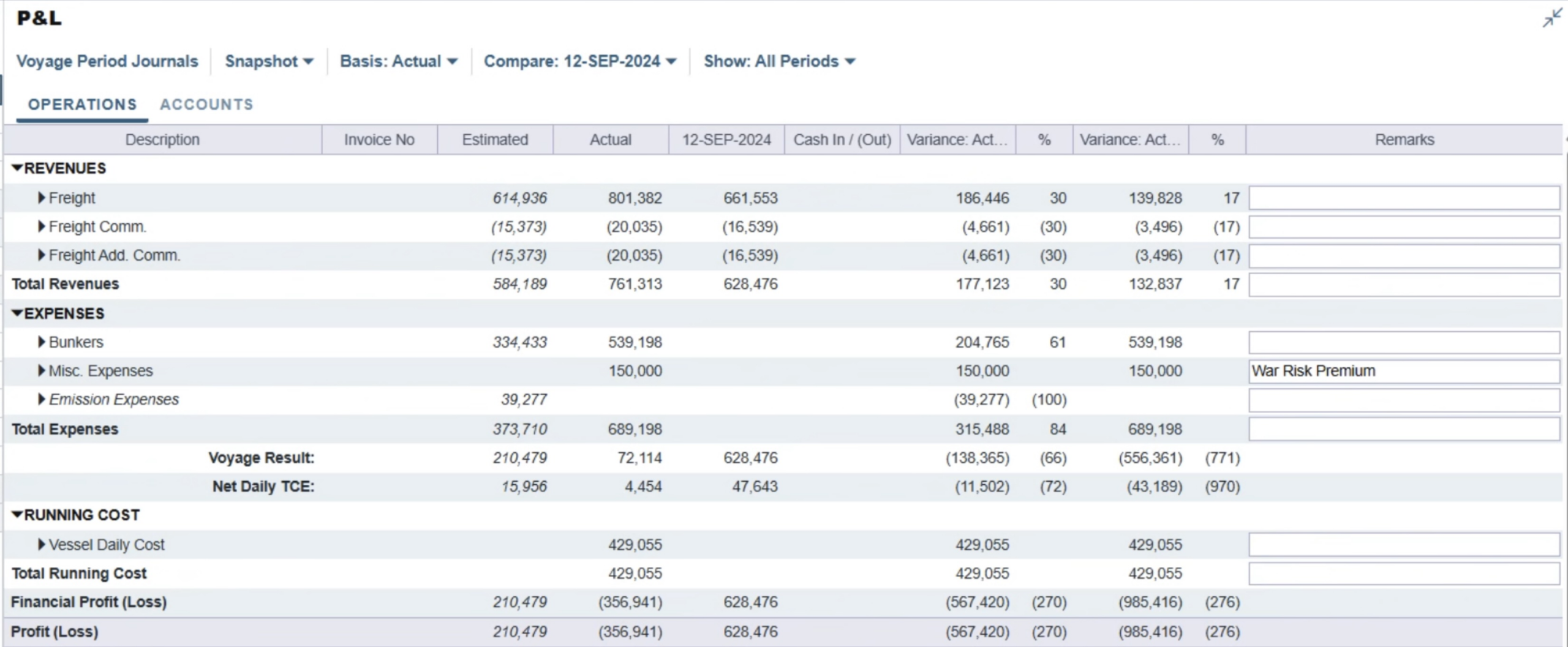
My advice: Schedule P&L Snapshots on all active voyages . Having a recorded baseline is the most important reference point you will have for the weeks and months ahead.
5. Model the decision before committing: estimate comparison and column view
How do you evaluate competing routing options before committing to a reroute?
Routing decisions under disruption are, at their core, P&L decisions. For a VLCC, the difference between waiting and rerouting can run to seven figures, and the right answer depends on a set of variables that are all moving simultaneously: bunker prices, freight rates, port congestion, and voyage duration. Getting that analysis wrong is expensive. Getting it right, quickly, is a competitive advantage.
The Estimate Column View in IMOS allows you to run multiple scenarios side by side and compare TCE and margin outcomes directly.
Consecutive Estimates let you model the downstream effect: if the current voyage is extended by fifteen days due to rerouting, what does that do to the next fixture in the sequence? These are the second-order questions that tend to get missed when teams are managing the immediate crisis, and they are exactly where the platform earns its keep.
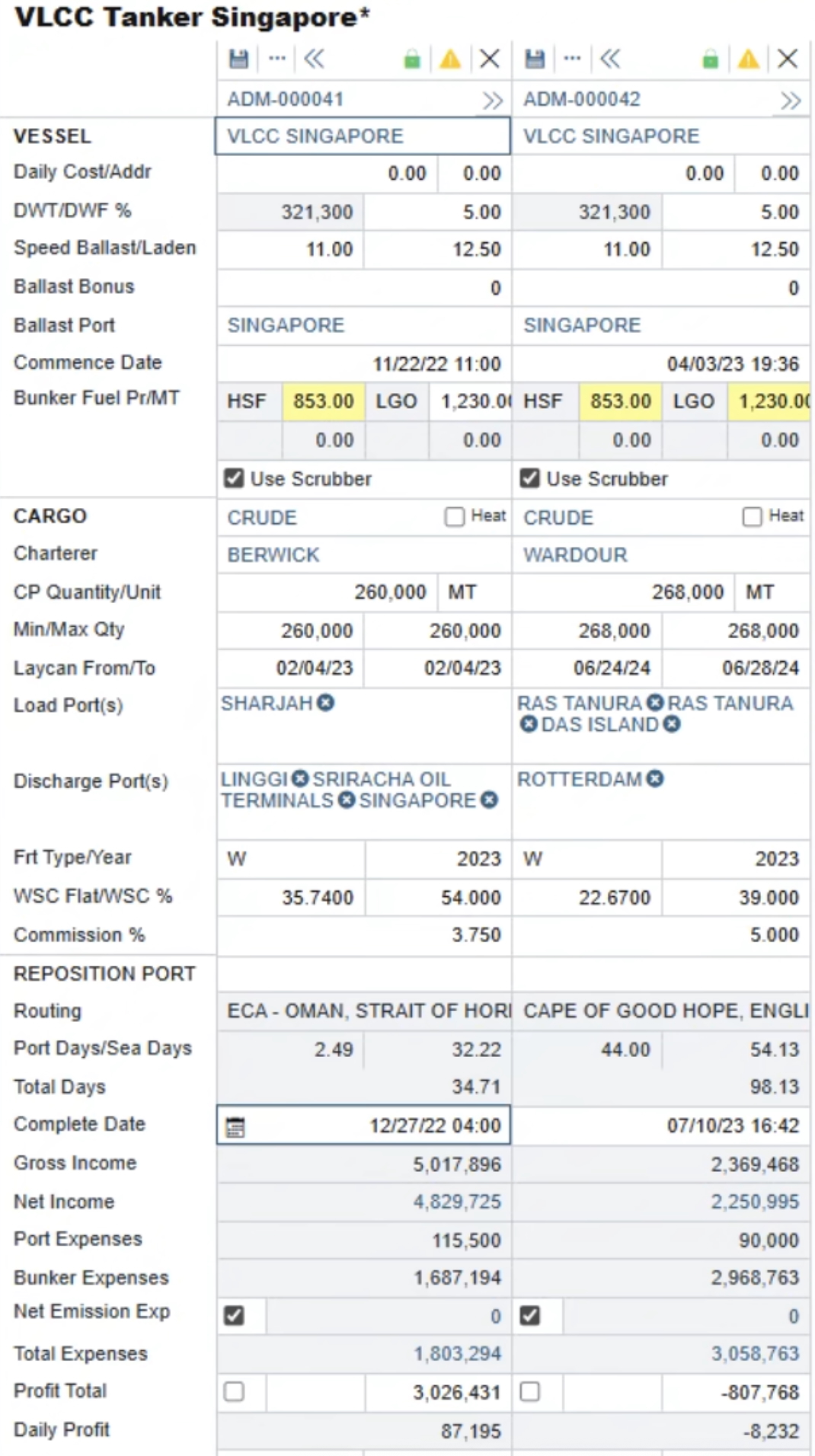
My advice: For every voyage, run different routing scenarios and present the TCE comparison before committing to a route.
The platform is your advantage
A Hormuz closure is an extreme scenario, but the underlying challenge isn’t new. The clients who’ve navigated these disruptions most effectively weren’t scrambling to build workflows after the fact, they already had them in place: systematic alerts, real-time pricing, hedging tied directly to voyage P&L, and scenario modeling embedded in the chartering process.
The five capabilities above are not new. They exist in your IMOS environment today. What changes in a crisis is the cost of not using them.
If your team needs help configuring any of the above reach out to your Veson account team or contact us here.
Key takeaways
- Voyage estimates built on pre-crisis rate and bunker assumptions are systematically mispriced. IMOS Market Pricing connects estimates directly to live Baltic indices and fuel rates so your P&L reflects current reality.
- The Tasks & Alerts engine can automatically surface every vessel, estimate, and voyage with AG/Persian Gulf exposure, eliminating the need for manual fleet-wide reviews during a fast-moving disruption.
- Bunker swaps entered in IMOS link directly to voyage P&L, giving you a true net fuel cost view and real-time mark-to-market visibility on hedge effectiveness.
- P&L Snapshots preserve your pre-disruption baseline — essential for variance reporting, charterer negotiations, and insurance claims.
- Estimate Column View lets you model competing routing scenarios side by side with live rate inputs before committing to a reroute.