
Client Stories / Cetus Maritime
From Merger to One Unified Platform with Shipfix + IMOS

About
Cetus Maritime is the result of a partnership between Asia Maritime Pacific and Hamburg Bulk Carriers. Cetus is a Dry Bulk Shipowner which owns and controls a fleet of over 40 vessels, covering four sectors.
Company Type
Vessel Owner-Operator
Industry
Dry Bulk

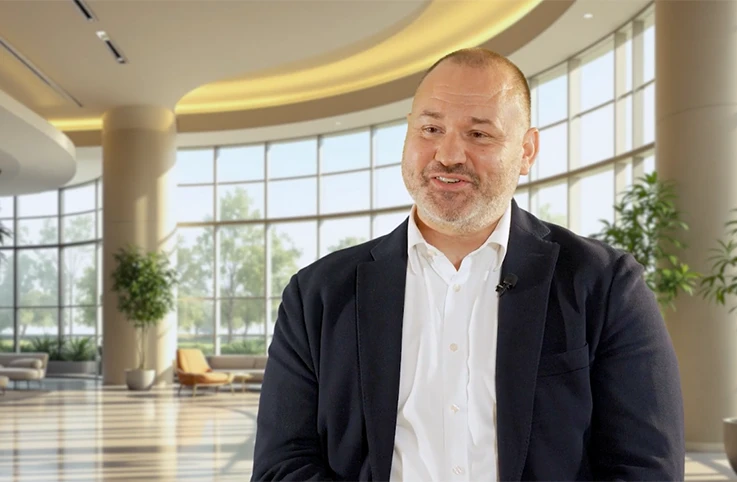
Stephan Korsgaard
Global Head of Operations
Products Used
The Challenge
Unify operations and workflows in a newly merged global organization
The Solution
A unified system with IMOS and Shipfix, delivering a collaborative, streamlined workflow built on a scalable foundation of data and AI
Key Results
An integrated operating model for faster email handing, informed decision making, and long-term growth.
Cetus Maritime: From Merger to One Unified Platform with Shipfix + IMOS
Cetus Maritime is a dry bulk operator formed through the merger of three established companies. With hubs in Hong Kong, Shanghai, Singapore, and Hamburg and a fleet of around 40 vessels, the organization set out to build a single operational foundation that could bring consistency and alignment across its global teams.
As Global Head of Operations, Stephan Korsgaard leads this transformation. His focus is on building a unified operational structure that connects teams, improves workflows, and creates a foundation the company can continue to scale on. Leveraging IMOS and Shipfix has played a pivotal role in that journey.
Building structure and reducing workload
Building a foundation on IMOS and Shipfix has given Cetus the structure and clarity it needed to unify communication and operational workflows.
“The introduction of IMOS and Shipfix has helped us structure our email handling,” Stephan says. “You can simplify your reading patterns and your time spent on different things, and deal with problems faster.”
With Shipfix organizing information flow and IMOS supporting core voyage work, teams across all hubs now operate from a consistent and connected platform.
Improving collaboration across regions
For an organization working across multiple time zones, real-time accessibility is essential. “Having a unified system with Shipfix and IMOS together makes us more adaptable and quicker in our work,” Stephan notes. “The access on both your desktop and your phone helps us stay aligned.”
This unified model also makes it easier to onboard new colleagues and maintain consistent practices across locations.
Guiding teams through change
Transitioning to new systems also meant adjusting familiar routines. Stephan describes it as a natural part of change and growth. “It’s not that it’s hard — it’s just different,” he says. “We talked a lot about the culture change.”
He added that both systems are intuitive, which helped teams across Cetus adopt them successfully.
Toward a connected digital ecosystem
As Cetus continues to refine processes, systems integration remains a major focus. “We are looking to integrate,” Stephan explains. “The systems have to be able to talk to each other, so we are choosing partners that are able to talk with Veson and create a shared platform.” Centralizing data is an important part of that vision. “Access to the data should be not in a hundred different places, but very few.”
AI is also becoming part of Cetus’s future-facing strategy. “The whole AI talk that we are all in at the moment,” Stephan says, “not that we all know exactly where we want to end up, but we are choosing partners fairly carefully to support the commercial departments — and decision-making should be faster and easier.”
Bringing it all together
For Stephan, the partnership with Veson is both operational and strategic. “I see it as two sides,” Stephan says. “One is the system development on Veson’s side, and then internally, what data should be driving our industry.”
As Cetus continues to centralize its information, clarity and connection remain guiding principles: “Access to the data should not be in a hundred different places, but a select few,” says Stephan. This is where integration becomes essential — bringing diverse data sources together while maintaining a coherent, unified center point.
With IMOS and Shipfix as core pillars of this approach, Cetus Maritime is shaping a streamlined, scalable operating model built for faster decisions, stronger collaboration, and long-term growth.
Ready to see more?
If you like what you’re reading, let’s take the next step. Schedule your one-on-one demo today.
More to explore
See the story
Shipfix Migration Overview
See the StoryRead now
Many Users, One Platform
See the StoryWatch now