
Every year at Singapore Maritime Week, the city becomes a gathering point for some of the sharpest minds in shipping, and the 2026 edition was no exception. This year, I had the privilege of speaking at the ICS ASEAN Shipping Forum, co-hosted by Veson.
The calibre of speakers, the depth of conversation, and the energy in the room during the forum reflected exactly why events like this matter for our industry, pushing forward innovation and collaboration at such a critical moment of change.
Speaking on AI and the Future of Chartering
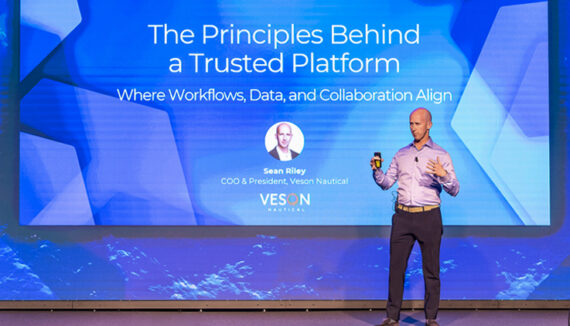
I had the opportunity to present during the forum on how AI is being embedded into maritime workflows and reshaping the chartering space. Getting to do so was one of the highlights of my week.
What struck me about the forum’s agenda this year was how consistently AI surfaced as an undercurrent, even when the headline topic was something else — whether trade flows, decarbonisation, or regional demand shifts. This context laid the perfect backdrop for the focus of my remarks: that we are past the point of asking whether AI will reshape maritime, but how it can be effectively woven into daily operations.
At Veson, our philosophy on AI and the principles guiding our approach to platform development — treating AI not as a headline feature, but as something genuinely embedded into the workflows that support high-stakes chartering decisions every day. The diversity of experience in the room, across fleet types, trading strategies, and geographies, only reinforced this point: while the form that AI adoption takes may vary, the discipline and clear strategy required to do so well is universal.
I also spoke about the competitive stakes. While well-adopted AI creates a real market advantage, the cost of missed opportunities at critical moments is equally real.
Where the Industry Actually Stands on AI
The more I’ve thought about the day, the more a few themes keep surfacing that I think are worth naming directly.
The first is just how wide the gap still is between experimentation and adoption when it comes to AI in maritime.
That’s not a criticism; maritime is a complex environment, and it’s important to move carefully. But it does mean that the industry is approaching a real fork in the road: consolidate your approach to digitalization with clear governance and workflow strategy, or risk ending up with a fragmented set of tools.
The second is that governance matters as much as the technology itself. When you’re opening up your operational data and documentation to AI tools, the questions around what’s being accessed, by whom, and under what rules are not secondary concerns. Several conversations at the forum reinforced that organizations who are getting this right are treating governance as a foundational step, not an afterthought.
The third is about depth versus surface. There’s no shortage of tools that can generate an output quickly. What separates genuinely useful AI from impressive-looking interfaces is domain specificity — the ability to understand how you calculate voyage economics on an LPG cargo, how to extract the right terms from a charter party, how to factor in EU ETS obligations, how vessel type affects how you capture data.
These intricacies must be built into digital tools from the start, and it requires partners who deeply understand the industry.
Building AI Success for the Future
How can organizations approach change management when it comes to AI adoption? It’s something I think about a lot as we design new tools and solutions that change the way teams go through daily operations. It comes down to being methodical about introducing new tools to teams, and crafting solutions that make it easier to surface the right information at the right time, proving the idea that AI is meant to make our jobs easier, not redundant.
As the next generation of maritime leaders steps up, the expectations around speed, simplicity, and intelligence in the tools they use are going to keep rising. We need to be building for that now.
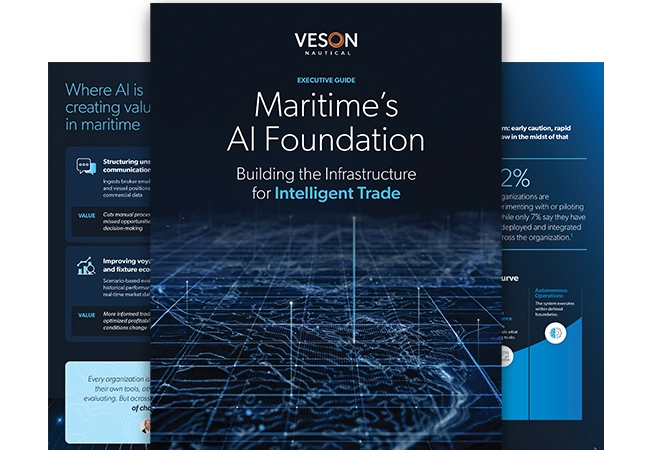
EXECUTIVE GUIDE